Find the water's path before choosing a fix
Basement water arrives by a few routes. Rain runs along the foundation wall and seeps through a crack or the joint where wall meets floor. Groundwater rises under the slab. Gutters dump roof water at the corner. Each route calls for a different solution, so the first job is deciding which one you actually have.
A simple test helps. Tape a square of plastic wrap to a damp wall for a day or two. Moisture on the outside of the plastic is humid air, and moisture under it is water moving through the wall. That one check can keep you from paying for the wrong repair.
What a leaking foundation tends to look like
White crust on the wall
Mineral salts left behind as moisture passes through block or concrete and dries at the surface.
Damp edge where wall meets floor
This joint is a common entry point because water collects at the lowest seam.
Musty smell without visible water
Humidity from a damp wall or slab, often worst after several wet days.
Peeling paint or bubbling sealer
Water pushing out from behind the coating, so more paint will not solve it.
Horizontal crack in a block wall
A sign of soil pressure against the wall. This is a structural question for an engineer, not a plumbing patch.
What a plumber handles and what needs someone else
Plumbing-side fixes
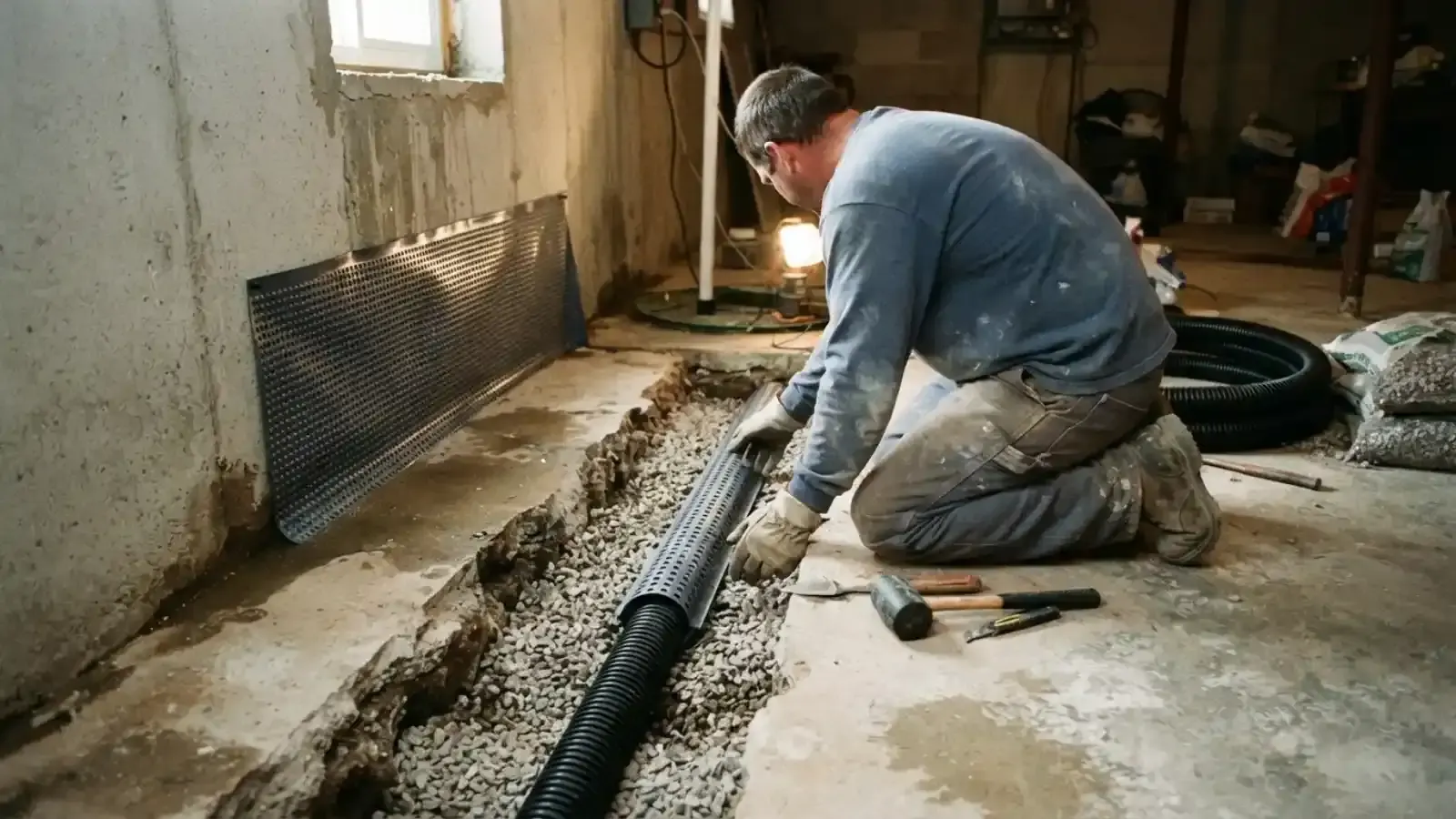
- Interior perimeter drain tied to a sump pit
- Sump pump sizing, install and discharge line
- Check valve and discharge routing
- Leaking supply or drain pipes mistaken for seepage
- Floor drain and backwater problems
Outside our scope
- Structural cracks or bowing walls
- Regrading the yard
- Exterior excavation and membrane work
- New gutters and roof drainage design
- Foundation underpinning
Not sure where your water comes from?
Describe what you see, when it shows up and how often. We will tell you straight whether it sounds like a plumbing job or one for a grading or structural specialist.
Solon rules that shape a basement drain system
Solon's sewer code states that no foundation drains shall be tied into the sanitary sewer, and that sanitary sewers are not meant to carry storm, surface or ground water. The city also dye tests downspouts, driveways and area drains for rain water leaking into the sanitary system. A perimeter drain has to end at a sump pump and a proper outside discharge.
The city's stormwater page encourages disconnecting downspouts and using rain barrels, and some of that work may need a permit. Check with the Solon engineering office before you move a downspout, because routing roof water away from the house is often the cheapest part of any dry-basement plan.
Which waterproofing approach fits your problem
| Where the water shows | Common cause | Plumbing-side response |
|---|---|---|
| Wall and floor joint | Hydrostatic pressure at the seam | Interior drain channel to a sump pit |
| Whole slab damp or wet | Rising groundwater | Interior drain plus a correctly sized pump |
| One corner after rain | Downspout or grade at that spot | Move the downspout, then recheck |
| Floor drain bubbles in storms | Overloaded sewer or tied-in drain | Drain camera, backflow review |
| Pit runs without rain | High water table or a leak | Pump check, line trace |
Many Solon basements need two of these together, such as a pit and a downspout fix, rather than a single big repair. A floor drain that bubbles in storms may also point to a sewer line problem.
How we approach a wet basement
- 1
Walk the perimeter
We look at each wall, the floor seams, the pit if there is one, and the outside gutters and downspouts.
- 2
Rule out a plumbing leak
A weeping supply line or sweating pipe can mimic seepage, so we test before assuming it is the foundation. See leak detection for how we locate those.
- 3
Present the options
You hear what is fixable by plumbing, what is not and a clear price before work starts.
- 4
Install and test with water
After the work we run water through the drain and pump so the system is proven under load.
Why age and soil matter for Solon basements
Per an older Census profile, the median Solon home was built in 1981 and about 31 percent date to the 1950s through the 1970s. We cannot say how many have basements or how they were waterproofed. But homes of that age sometimes have original drain tile and older pumps, so a pump that predates your ownership is worth testing.
Cleveland Hopkins airport averages around 41 inches of precipitation and 63.8 inches of snow a year per the National Weather Service. That is the Cleveland airport, not Solon, and Solon sits in the snowier eastern side of the area. Spring thaw plus heavy rain is when a marginal basement shows its weakness. Call before the wet season, not after, and read about sump pump repair if your pit is already running hard.
What moves the price of a waterproofing project
Homeowners policies usually cover sudden, accidental water damage but not wear, neglect or seepage through a foundation. Check your policy for water backup coverage before you plan the work.
Wet basement questions from Solon homeowners
Interior drainage handles water that has already reached the wall and floor joint. Exterior membrane work stops water at the outside face but means digging out the foundation. Which fits depends on the wall, access and budget, so we look at it case by case.
Waterproof paint can help with light dampness, but it cannot hold back water pressing through the wall. If paint is bubbling or peeling, water is pushing from behind and the source needs fixing first.
Solon's code says foundation drains may not tie into the sanitary sewer, and sanitary sewers are not for ground water. Ask the Building Department about the exact discharge rules for your address.
A leak keeps flowing when it has not rained and may follow a pipe run. Seepage tracks with rain and snowmelt. Watching the water meter with every fixture off is a fair first check.
It reduces humidity but does not stop water entering. If you see liquid water or a growing damp patch, address the entry point first.
Yes. Dial 811 at least two working days before any digging, including by hand. Ohio811 notifies the utilities so they mark buried lines for free.
Sources and standards behind this page
Local facts and rules on this page come from these public sources. Check the current version before relying on a permit or code detail.