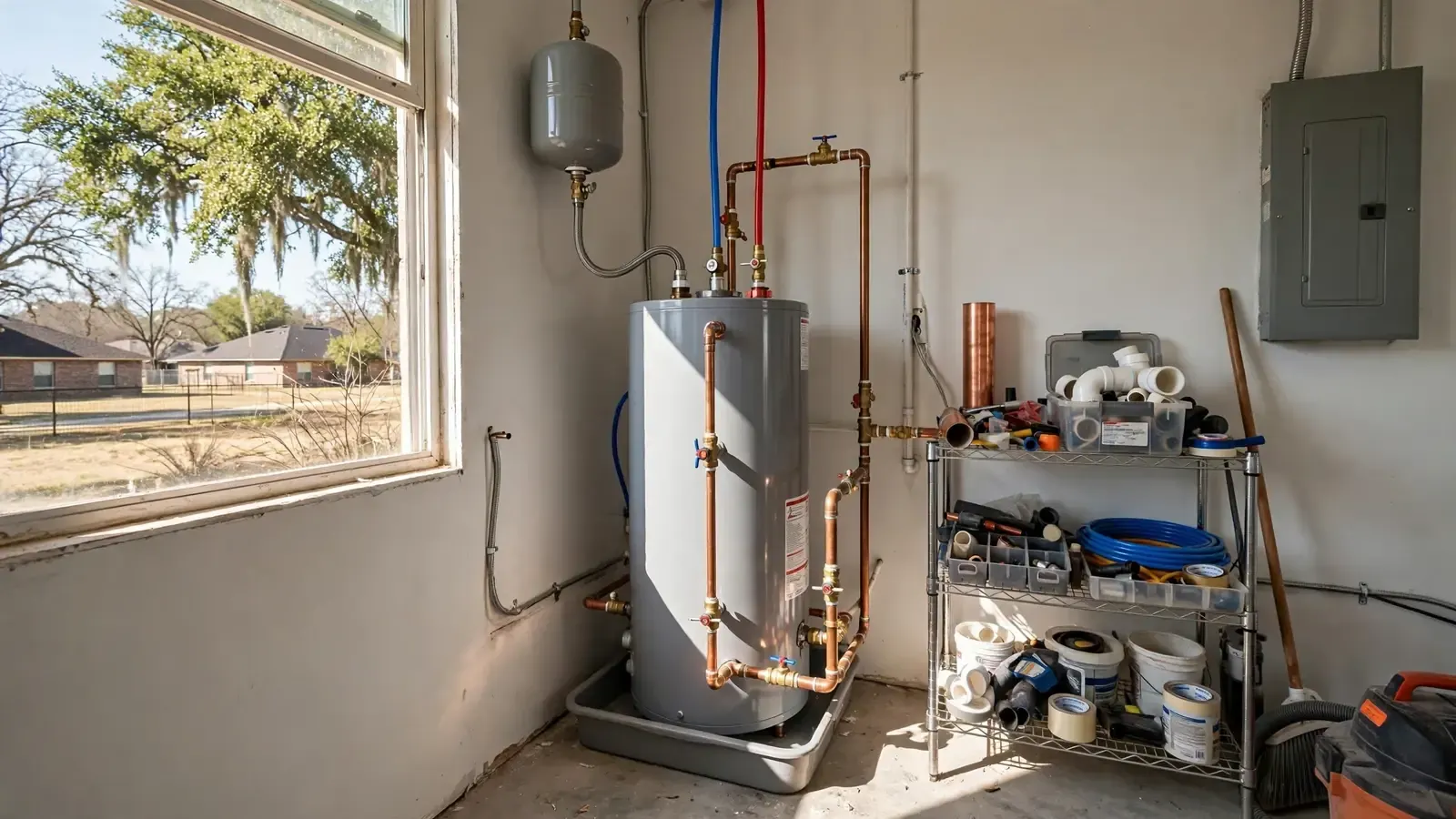
Pick the spot before you pick the heater
The right heater is the one that fits the room it lives in. Check the clearance around it for service, the strength of the floor beneath, and how far the hot lines run to the kitchen and baths. A long run wastes water while you wait for heat.
In a finished basement or remodel, moving the unit often means a new vent path or a new drain route. Note where your shutoff valves and floor drain sit and bring photos to the call. That can save a second trip.
What we check at the site
| Item | Why it matters | What we look at |
|---|---|---|
| Venting | Exhaust gases must leave the building safely | Flue path, slope, and clearance to combustibles |
| Fuel supply | Gas or power must match the new unit | Gas line size or panel space and circuit |
| Drain and overflow | A leak needs somewhere to go | Pan, relief valve pipe, and nearest floor drain |
| Floor and clearance | A full tank is heavy and needs service room | Level surface and space for future repairs |
| Water pressure | Pressure swings stress the tank and fittings | Static pressure and whether an expansion tank is called for |
Whether your home needs an expansion tank depends on the water system and the manufacturer's instructions, so we check on site. If the job also touches fixtures or supply lines, our plumbing installation work covers that in the same visit.
Gas, electric, or heat pump
Fuel choice shapes everything from venting to the monthly bill. Each type has a place, and the best pick depends on what your house already has.
Gas tank or tankless
Gas heats quickly and recovers fast, but it needs a flue and a correctly sized gas line. A tankless gas unit often needs a larger line than the tank it replaces.
Electric tank
An electric heater needs no flue, which makes placement easier. It does need panel capacity and a circuit that suits the elements.
Heat pump tank
A heat pump model moves heat from the room air into the water. It needs open space around it and a condensate drain, and it cools the room a little as it works.
Have a layout in mind?
Send us the details by phone: fuel, tank size, and where you want the unit. Call (440) 468-0237 and we will tell you what the site needs. We schedule same-day when openings allow.
Install day, in order
- 1
Walk the site
We confirm the spot, the vent route, and the shutoffs, then talk through the plan with you.
- 2
Rough in the supply
Water lines, fuel or wiring, and the drain path are set up before the heater is placed.
- 3
Set and connect
The unit is leveled, connected, vented, and piped to a relief discharge.
- 4
Test and explain
We fill, purge air, check each joint, light or power the unit, and show you the controls.
Permits and registration in Solon
Solon's Required Residential Permits Guide lists all new plumbing installations and water heater replacement as work needing a plumbing permit. A new heater, a moved heater, or a swapped one all fall under that kind of work. The city Building Department can confirm which form applies to your project.
Contractors working in Solon register with the city every year and show a current Ohio plumbing license. Ask to see both before you sign, and ask who files the permit.
Settle these before install day
- ✓Fuel choice.Decide if you will keep your current fuel or change it. Changing is possible but adds scope.
- ✓Tank size.Match it to how many people shower and whether laundry overlaps. We help you size it.
- ✓Path to the spot.Measure doors and stairs. A clear path saves time on the day.
- ✓Old unit disposal.Tell us if there is an old tank to haul out. A related swap is covered on our water heater replacement page.
What shapes an installation price
Homeowners policies usually cover sudden, accidental water damage but not wear, neglect, or the failed part itself, so check your policy. A new install is a planned project, not a claim.
New heater plans: questions from Solon homeowners
Often yes. A move changes the vent route, the drain path, and the length of piping. Send photos and we will tell you what the new spot needs before any work starts.
Solon's Required Residential Permits Guide lists new plumbing installations and water heater replacement as permit work. Ask us who files it, and confirm details with the city Building Department.
Whichever your house already supports cheaply. Gas needs a flue and a correct line. Electric needs panel space. A heat pump model needs open air and a drain. We lay out the tradeoffs on site.
It depends on your water system and the manufacturer's instructions. We check the setup and tell you what the install calls for.
Yes, and it is more involved than a tank swap. Read our tankless water heater page for the gas, venting, and hard water points.
Clear the area around the old heater, keep pets away, and make sure we can reach the water shutoff. If you have a utility closet door, check it opens fully.
Sources and standards behind this page
Local facts and rules on this page come from these public sources. Check the current version before relying on a permit or code detail.