How you know it is the main line and not one drain
One slow sink is a fixture problem. These patterns point to the line that leaves the house.
Floor drain bubbles or rises
The basement floor drain is the lowest opening in the house, so it shows a blocked main first.
Toilet flushes and the tub gurgles
Water has to push past a blockage downstream, and air escapes through the nearest trap.
Washing machine drains and a basement fixture overflows
A sudden surge exposes how little room is left in the pipe.
Several drains slow at once
When upstairs and downstairs fixtures all lag together, the shared line is the likely culprit.
Sewer smell in the yard or basement
A persistent odor can mean a partial blockage, a dry trap or a damaged section. We look to see which.
Where the blockage usually sits and what causes it
Most main line stoppages come from tree roots that enter at joints, grease that hardens on the pipe wall, or flushed items that snag on a rough spot. Older clay and cast iron pipe have more joints and more rough surfaces to catch debris.
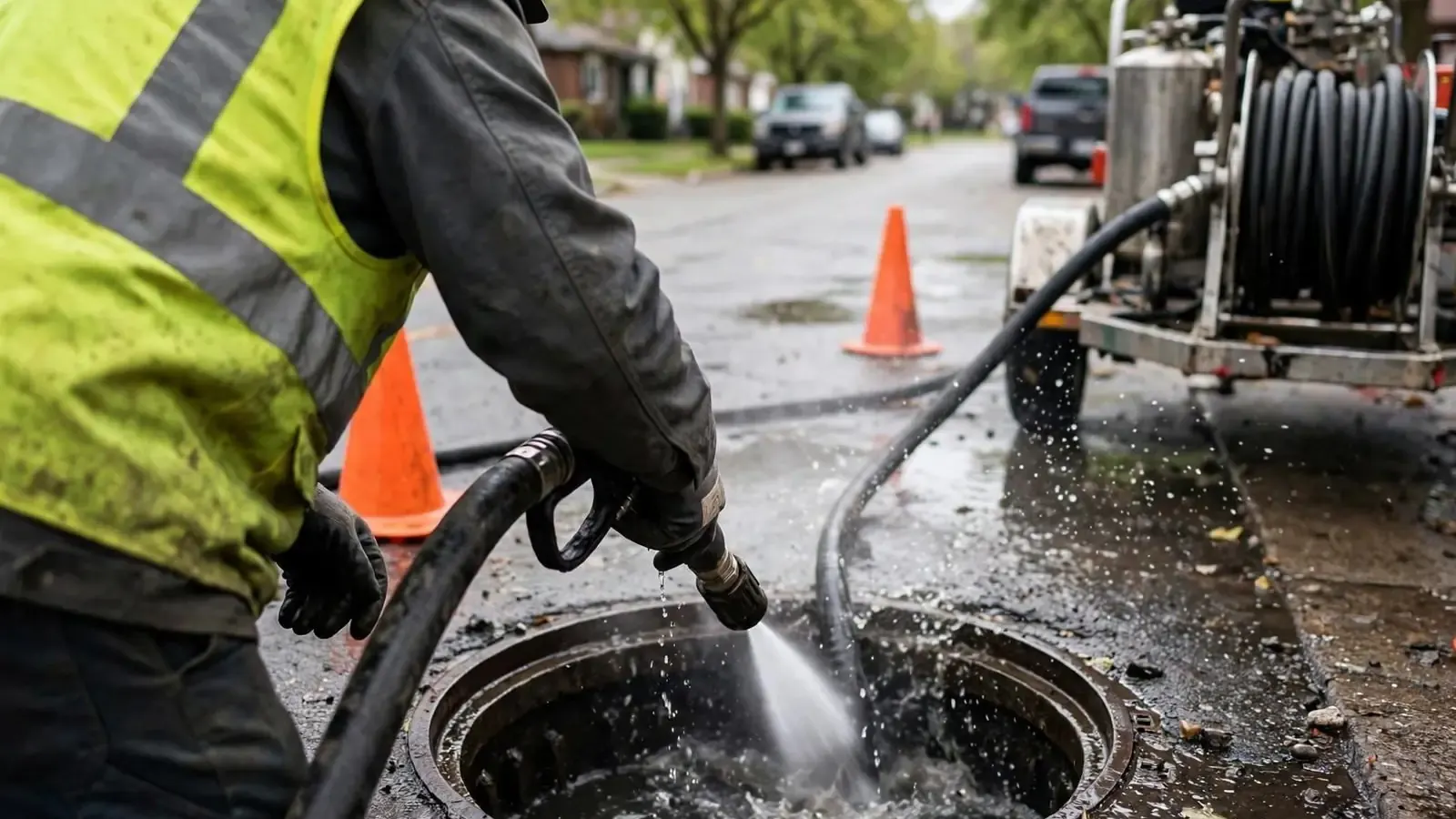
The cure depends on the cause. Soft buildup comes out with a cable and a cutting head. Heavy grease or repeat roots call for hydro jetting, which scours the pipe wall instead of poking a hole through it. We tell you which one fits before work starts.
Who owns which section of the line in Solon
The City of Solon says the property owner is responsible for the lateral from the house to the cleanout. The city maintains its own sewer main in the street, and its Service Department asks residents with sewage backing up into a basement to call it. Crews check the main first, and if it is clear they point you to a licensed plumber.
Make that call while we are on the way if you can. It rules out a city main problem, and it keeps you from paying for work that would not have fixed a street side blockage. The city has not published exactly where the cleanout boundary sits, so we look at your layout together.
Basement floor drain coming up?
Call (440) 468-0237 now. We answer sewer backups at all hours and offer same-day visits when the schedule allows.
Contain a sewer backup until the cable arrives
- ✓Stop water everywhere.Every toilet, sink, shower and appliance feeds the same blocked line.
- ✓Keep children and pets away from the water.Sewage carries bacteria. Wear boots and gloves and avoid touching surfaces with bare skin.
- ✓Move what you can off the floor.Boxes, rugs and stored items soak up contaminated water fast.
- ✓Leave the electrical panel alone if water is near it.If water is rising toward outlets or the panel, stay out of the room and tell us when you call.
- ✓Have the cleanout area clear.A visible cleanout lets us run a cable in without moving furniture first.
From the cleanout to a clear line
- 1
Open the cleanout carefully
Backed up water can shoot out when the cap loosens, so we release it slowly and control the flow.
- 2
Run a cable to the stoppage
A larger drum machine reaches farther than a household snake. We cut through roots or grease until the cable moves freely.
- 3
Flush and test
We run water through the line and check that it flows without hesitation from every fixture.
- 4
Show you what we found
If the cable pulled up roots or pipe scale, we tell you. A camera inspection can follow when the cause is unclear.
Sewer line cleaning methods at a glance
| Method | Best for | Limit |
|---|---|---|
| Cable with cutting head | Roots and solid blockages | Leaves some film on the pipe wall |
| Hydro jetting | Grease, scale and repeat clogs | Needs a pipe that can take the pressure |
| Camera look first | Unknown cause, stalled cable | Adds time, saves guessing |
| Cleanout cap and flush | Light blockages near the cleanout | Not for deep or heavy clogs |
| Pipe repair after cleaning | Breaks, sags, root entry points | Separate scope and price |
Cleaning clears the pipe, but it cannot fix a break. If the cable or camera shows damage, we explain the next step, including sewer line repair.
Why a foundation drain should never reach this line
Solon's code states that foundation drains may not be tied into the sanitary sewer, and that the sanitary sewer is not meant to carry storm or ground water. When clean rain water is forced into a sewer lateral, it fills the pipe during heavy storms and can push sewage back into a home.
If your lateral backs up mostly after hard rain, tell us. We cannot tell you how your house is plumbed from here, and the city building department is the right place to ask about connections.
What goes into the price of clearing a main line
You get a price before the cable goes in.
Homeowners insurance usually covers sudden, accidental water damage but not wear, neglect or the failed part itself. Many policies treat sewer backup as an add-on, so read yours and ask your insurer before you decide what to claim.
Sewer line cleaning questions from Solon homes
Yes. Dispatch runs 24/7, including holidays. Call with the details, follow the steps we give you for containing the water, and we will quote the price before any cable goes in.
If sewage is in your basement, the city asks you to call its Service Department, which checks the street main first. Call us at the same time if you want a plumber on the way, since the city sends you to one if the main is clear.
A clear cleanout and a soft blockage can be done in a short visit. Heavy roots, a long run or a hidden cleanout take longer. We tell you what we see before we start.
It can if the cause remains. Roots at a joint or a sag that holds water will refill the line, so we show you the cause and the options, including a regular cleaning schedule.
All fixtures share the main. A partial blockage there slows the whole house, even before a full backup.
Light snaking from a cleanout is possible for some homeowners, but sewage is a health risk and a rented machine can snag or damage old pipe. If the water is already rising, call.
Sources and standards behind this page
Local facts and rules on this page come from these public sources. Check the current version before relying on a permit or code detail.