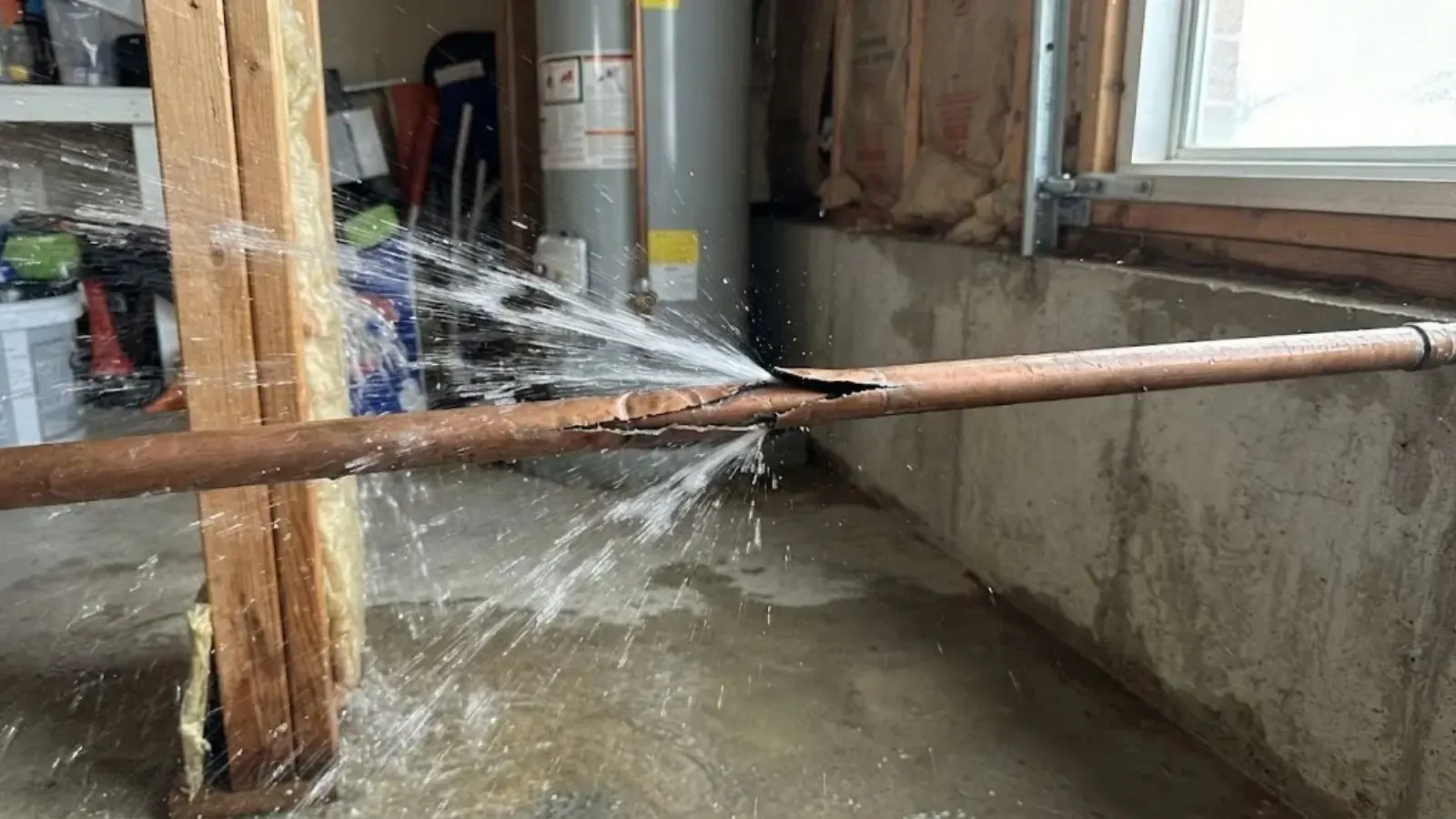
The first two minutes decide how bad the floor gets
- ✓Close the main valve.Cleveland Water says the master shutoff usually sits where the line enters the basement or crawl space. Turn it clockwise until it stops.
- ✓Drain what is left.Open the lowest cold tap and a few upstairs taps. Less water behind the break means less on your floor.
- ✓Protect the electrics.If water drips near a panel, outlet or light fixture, stay clear. Cut the breaker only if you can reach it from dry ground.
- ✓Photograph before you mop.Take wide and close photos of the break and the wet areas. Your insurer will want them, and they help us plan the repair.
- ✓Turn off the water heater.A burst on the hot side can keep draining the tank. Shut the heater down so it does not run dry and damage itself, and we can look at it during water heater repair if it was hit.
If you smell gas at any point, leave the building and call the gas utility or 911 before you call anyone else. Then call (440) 468-0237 and tell dispatch where the water is coming from.
Why a deep freeze is hard on Cuyahoga County pipes
Cleveland Water reports a frost depth of 3 to 3.5 feet in northern Ohio and buries its mains more than five feet down. The pipes in your exterior walls, garage ceiling or crawl space get no such cover. If you have a run on an outside wall, check it first after a freeze.
Cleveland Water logged over 100 active main breaks in the first five days of January 2018, and February 2015 was Cleveland's coldest February on record at a 14.3 degree average. Ice can split a pipe long before anything leaks. The water often appears when the thaw arrives, so look for it as temperatures climb.
Pipe let go at midnight? Call anyway
After-hours calls reach the same dispatch, and we book same-day visits whenever the schedule allows. Give us your street, what you have shut off and where the water is coming from. We will tell you the price before we cut a single fitting.
Five ways a pipe fails besides ice
Freezing gets the blame, but it is not the only cause. The cause tells us whether to fix one spot or look at the whole run, and a slow loss that came first may call for leak detection as well.
Corrosion and age
Metal thins from the inside, often at threaded joints, until one weak spot gives way.
Pressure spikes
A slamming valve or a pressure surge sends a shock through the line and cracks an already tired section.
Failed fittings
A loose coupling or a cracked plastic elbow can let go even when the pipe itself is sound.
Damage during remodeling
A screw, nail or drill bit can nick a pipe that holds for months before it splits.
Shifting and settling
Slow movement in framing or soil strains rigid pipe at the points where it is anchored.
What happens once the crew is at your door
- 1
Confirm the water is off
We check your main, shut any other valves we need and relieve the pressure left in the lines.
- 2
Find the failed section
We trace the split and check the pipe on either side, because a break often has weak neighbors.
- 3
Cut out and replace
The bad stretch comes out and new pipe and fittings go in. If the fix grows into running new line, Solon's permit guide lists that as permit work, and we will say so up front.
- 4
Restore and test
We bring pressure back slowly, watch every joint and walk you through what we did before we leave.
Match the break to the repair
| Pipe material | How it usually fails | Typical repair |
|---|---|---|
| Copper | Split from ice, or pinholes from corrosion | Cut out the bad section and solder in new copper |
| PEX | Split near a fitting after a hard freeze, or a loose fitting | Replace the section with new fittings |
| Galvanized steel | Rust-thinned wall gives way at a threaded joint | Replace the run, since the pipe nearby is thin too |
| CPVC | Cracked fitting from age or impact | Cut and replace with new fittings |
| Drain or vent line | Crack from settling or a frozen trap | Replace the cracked section, then test |
If the same line has failed twice, a third patch is a poor bet. We will tell you honestly when repiping that run makes more sense than another splice.
What shapes the price of a burst pipe repair
A sudden burst is the kind of accidental water loss most homeowners policies cover, but they usually will not pay to replace worn pipe itself. Call your insurer early and keep your photos.
Burst pipe answers for Solon homes
Yes. Dispatch answers at all hours, and a pipe that is actively pouring comes ahead of routine work. Close the main valve if you can, call, and we will tell you what we can fix tonight and what can wait until daylight.
Start inside, at the master valve where the line enters the basement or crawl space. The valve at the curb belongs to Cleveland Water's side of the system, so leave it unless the inside valve will not close and tell us that when you call.
A burst moves a lot of water fast. You may hear it, see it spray or find a room wet within minutes. A slow drip or a stain that grows over days is usually a leak, and we trace those separately.
Treat it as one. Shut the main and open the nearest tap so thawing water has somewhere to go. Never use an open flame on the pipe, and call us before it thaws because the split often shows only then.
Often it covers the sudden water damage, but not the worn pipe that failed. Policies differ, so read yours or ask your agent. We give you a written description of the cause and the repair to help your claim.
Often, when the schedule allows. A short section in an open basement ceiling can be done in one visit. Pipes behind finished walls or long corroded runs may take a second step, and we tell you which before we start.
Sources and standards behind this page
Local facts and rules on this page come from these public sources. Check the current version before relying on a permit or code detail.