Water spreading from a toilet right now
If the bowl is rising toward the rim, lift the tank lid and press the flapper down. Then reach behind the toilet and turn the small valve clockwise until it stops. That cuts the refill and usually ends the flood within seconds.
If the water is dark, smells like sewage, or other drains gurgle when you flush, stop using every fixture in the house. That pattern points to a blockage below the toilet, not a problem with the bowl. We check the toilet first, then trace the line if the bowl is not the cause.
Water at the base after a flush often means a failed wax ring or a loose closet bolt. Water dripping from the supply line means a bad connection, and the stop valve usually controls it. If no valve will turn, close the main shutoff where the line enters your house.
What the toilet is telling you
It keeps running after the flush
A worn flapper or tired fill valve lets water trickle into the bowl all day. It wastes water and shows up on the next bill.
The flush is weak or partial
Mineral buildup in the rim jets or a partial clog in the trap slows the swirl. Plunging helps only if the clog is close.
It rocks when you sit
A loose flange or slack bolts break the seal. Sewer gas and slow floor damage follow, so do not wait on this one.
Water pools around the base
Dry the floor, flush twice, and watch where the first drop appears. Bowl base, tank bolts, and supply line each leak in a different spot.
It gurgles after you flush
Air is fighting for a path through a restricted vent or a slow drain. The toilet may be fine and the pipes behind it may not be.
Bathroom floor already wet?
Describe what you see to the dispatcher and tell us whether you can reach the shutoff. We send the right seals, valves, and supply lines on the first trip.
Setting a new toilet the right way
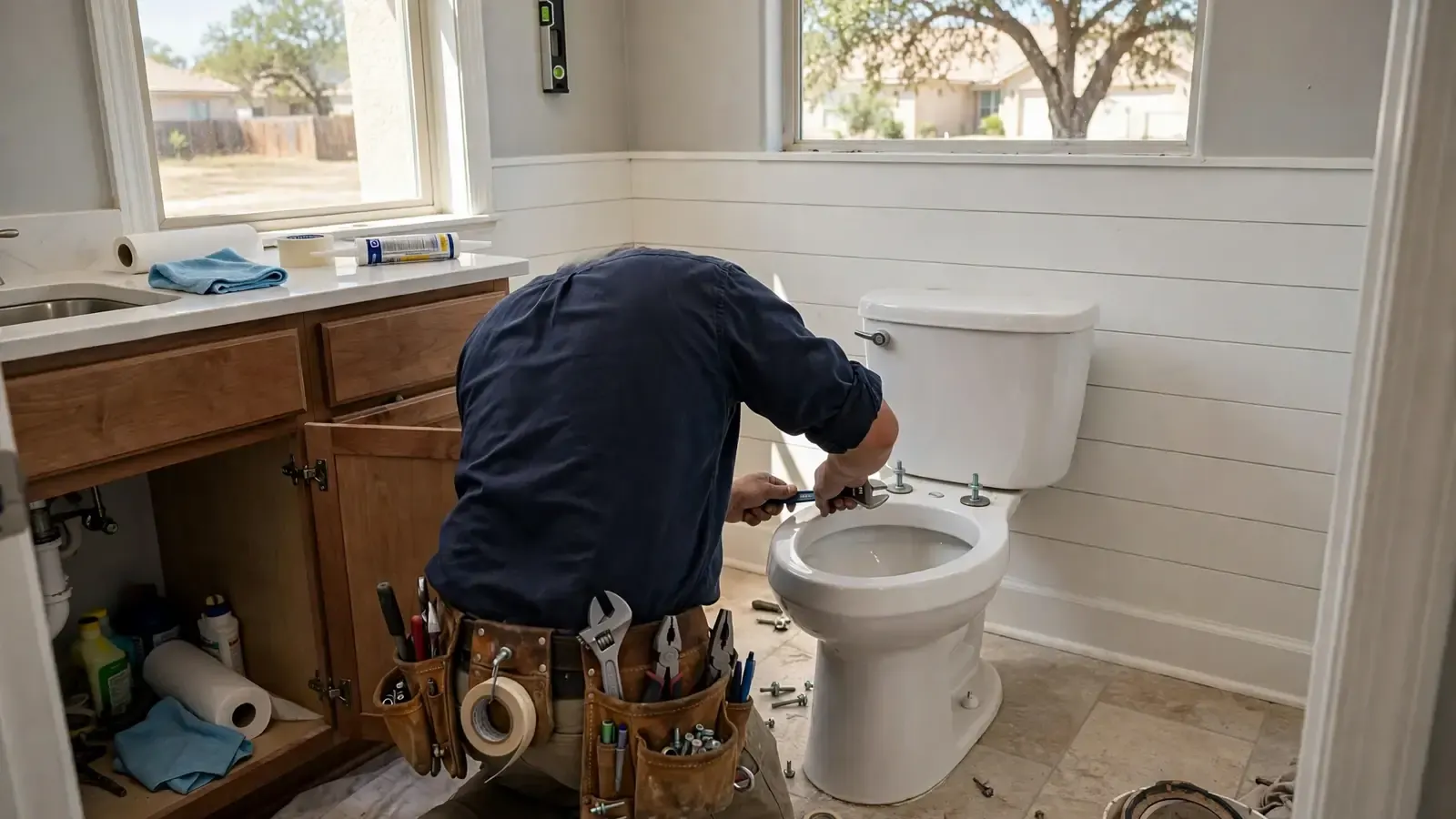
An install starts with the old toilet coming out and the flange getting a close look. A flange that sits too low, cracks, or rusts through will make a new toilet leak no matter how good the bowl is. We replace the wax or foam seal every time, seat the bowl evenly, and tighten the bolts in turns so the porcelain does not crack.
After the bowl is set, we connect a fresh supply line, run several flushes, and check for weeping at every joint. A level bowl and a dry floor after the last flush are what we look for before we leave.
When the flange is the real problem
A repair ring or flange kit can rescue a cracked top ring when the pipe below is sound. If the pipe itself is broken or the floor underneath is soft, the job grows into plumbing installation work, and we tell you that before we open anything up.
Fix it, reset it, or replace the toilet
Most toilets are worth repairing. The numbers change when the porcelain is damaged or the bowl is hard to keep clear.
| What you notice | Common cause | Usual answer |
|---|---|---|
| Runs on or refills by itself | Worn flapper, fill valve | Replace the inside parts |
| Wet floor at the base | Failed wax ring or loose bolts | Pull and reset with a new seal |
| Cracked bowl or tank | Impact or old stress fracture | Replace the toilet |
| Clogs every few days | Poor flush design or a deeper blockage | Camera the line, then decide |
| Rocks side to side | Loose flange or bolts | Reset or repair the flange |
A cracked tank or bowl cannot be patched safely. If a hairline crack weeps, replace it before it lets go.
How a toilet call runs
- 1
You describe the symptom
Tell us where the water shows up and whether the valve turns. That decides which parts ride on the truck.
- 2
We stop the water and dry the area
Shutting off supply comes first. Then we find the true source instead of guessing at the first wet spot.
- 3
You hear the price
We explain the fix and the clear price before work starts. Nothing gets pulled apart until you agree.
- 4
We repair, test, and clean up
Several test flushes and a dry-paper check around the base come before we call it done.
What moves the price of a toilet job
Toilet work covers a wide spread, from a ten-minute flapper swap to a full reset on a damaged floor. These are the pieces that decide where yours lands.
Homeowners policies usually cover sudden, accidental water damage but not wear, neglect, or the failed part itself. Check your policy, and keep the old parts and photos in case your insurer asks.
Solon water, permits, and what is under your floor
Cleveland Water, which supplies Solon, states its water measures about 7 grains per gallon, or roughly 120 mg/L as calcium carbonate. That is moderately hard. Minerals can crust on flappers and clog rim jets, so a flush that has slowly weakened may need cleaning, not a new toilet.
Solon's Required Residential Permits Guide says replacing fixtures does not need a permit, while new installations and new plumbing lines do. If you plan to move the toilet to a new spot, call the Solon Building Department before work starts.
When several drains back up at once, the problem may be the line outside, not the toilet. Solon says the property owner is responsible for the lateral from the house to the clean out, so a repeated backup may call for sewer line repair or a drain cleaning visit.
Toilet questions from Solon homeowners
Yes. Overflowing bowls, leaks at the base, and toilets that will not stop filling get same-day attention, and nighttime calls reach the same dispatch line as daytime ones. Tell the dispatcher whether water is still running and whether you can reach the shutoff, so the right parts arrive on the first trip.
A flapper that no longer seals or a fill valve that will not shut off is the usual culprit. Both are quick repairs. Drop a little food coloring in the tank, and if color reaches the bowl without flushing, the flapper is leaking.
Look for water or staining at the base, a toilet that rocks, or a sewer smell in the bathroom. A failed ring leaks only on flush, so the floor can look dry between uses. Replacing it means lifting the toilet, which is why we check the flange at the same time.
The city's Required Residential Permits Guide lists replacing fixtures as not needing a permit. New installations or new plumbing lines do. Ask the Solon Building Department if your job moves the toilet.
Yes. We set the toilet you bought, with a new seal and supply line. If the bowl arrives cracked or the parts are missing, we tell you before anything is installed.
Yes. We look at the problem, explain the fix, and give you a clear price before work starts. If we find something new once the toilet is lifted, we stop and talk before going further.
Sources and standards behind this page
Local facts and rules on this page come from these public sources. Check the current version before relying on a permit or code detail.