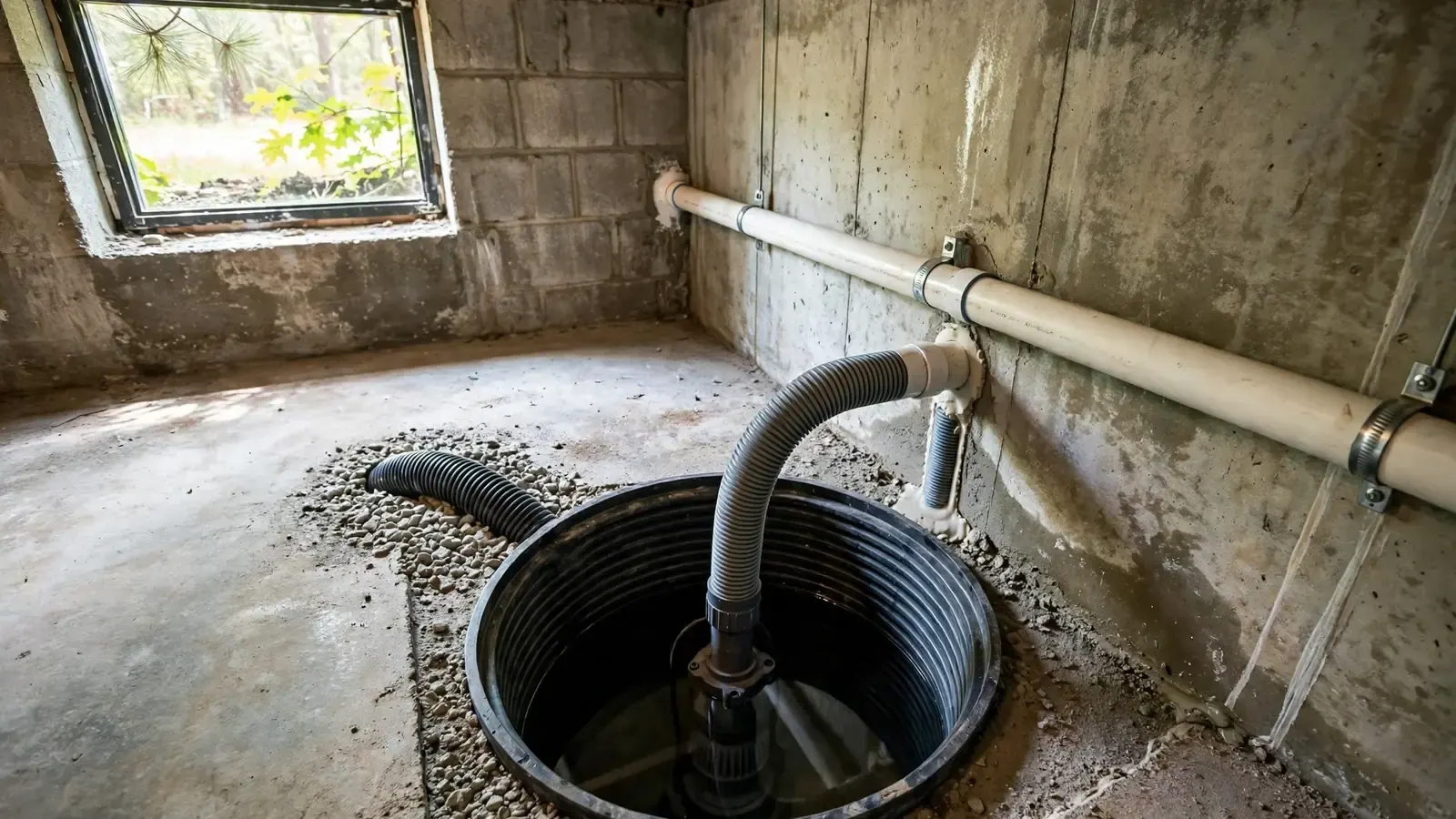
The pit is full and the pump will not run
A sump pump has one job, which is to move water out of the pit before it reaches your floor. When it stops, the pit fills in minutes during a heavy storm, and then the basement does. The usual causes are a stuck float switch, a burned-out motor, a clogged intake or a power loss.
Check the simple things while you wait. Look at the breaker and the outlet, and confirm the cord is still plugged in. If you can see the pit clearly and the floor around it is dry, lift the float by hand to see whether the pump starts. Do not reach in if any water is near a live cord.
Before we arrive: protect the room and yourself
- ✓Do not stand in water near outlets.Standing water plus power is the real danger, so shut off the breaker for that area if you can reach it dry.
- ✓Lift stored items.Cardboard boxes, rugs and appliance cords on the floor soak up water first.
- ✓Bucket and mop as a stopgap.A wet vacuum rated for water can slow a small leak, but it does not replace a working pump.
- ✓Shut off the washer and dishwasher.Their drain water often feeds the pit, so skip them until the pump is running.
- ✓Tell us what you hear.A humming pump that will not pump, a pump that runs without moving water, and total silence each point to different fixes.
Repair or replace: a quick decision guide
Not every failed pump needs to be thrown out. This is how plumbers usually sort it.
| What you see | Likely cause | Usual path |
|---|---|---|
| Pump hums but moves no water | Jammed impeller or failed check valve | Clean out or replace the part |
| Runs constantly, even when dry | Float stuck or switch worn | Reset or replace the float or switch |
| Cycles on and off every few seconds | Missing check valve, water falls back | Add or replace the check valve |
| Dead, no hum, power confirmed | Burned-out motor | Replace the pump |
| Pit overflows in storms | Pump undersized or pit too small | Larger pump or new pit |
If the pump is many years old, replacing it often makes more sense than a second repair. We show you the failed part before you decide.
Storm coming and the pump is questionable?
Do not wait for the first inch of water. Call and tell us how old the pump is and what it did last time, and we will book a same-day visit when we can.
Warning signs before a pump quits
Loud grinding or rattling
A worn bearing or debris in the impeller often sounds like this days before total failure.
Running when it has not rained
Constant cycling may mean a bad float, or groundwater and a leaking downspout feeding the pit.
Rust or orange water in the pit
Rusty water in the pit can mean corroding metal parts, so the pump housing deserves a look.
Pump that vibrates or rocks
Loose discharge pipe or a pump sitting on silt can cause noise and wear.
Smell from the basin
A sour odor can mean stagnant water, a missing lid or a basin that was never sealed.
Where Solon says the pit water cannot go
Solon's sewer code says sanitary sewers are not meant to carry storm, surface or ground water, and that no foundation drains may be tied into the sanitary sewer. The city also does dye testing in downspouts, driveways and area drains to find rain water entering the sanitary system. Those tests exist to find rain and groundwater entering the sanitary system.
We discharge the sump line to the outside, away from the foundation. The city's rule on exactly where it may discharge is not something we quote, so ask the Solon Building Department about your address before you change the route. That one phone call can save you a correction later.
How a sump pump visit goes
- 1
Check power and float
We confirm the circuit, then test the float and switch because they fail more often than the motor.
- 2
Inspect the pit and discharge
We look at the intake screen, the check valve and the line out to the yard for ice, kinks and clogs.
- 3
Explain repair or replacement
You get the options and a clear price before work starts, along with a look at what failed.
- 4
Test with water
We fill the pit and watch a full cycle, since a pump that starts is not proof it empties the pit.
Backups, battery power and new installs
Storms that fill pits also cause power cuts, which is when a plug-in pump is useless. A battery backup pump or a water-powered backup keeps the pit emptying through an outage. Ask us whether a backup suits your basement, since pit size and runtime matter.
For a new install, we size the pump to the pit and the water it has to move, set the check valve and run the discharge line away from the house. If water still gets in beyond what a pump can handle, read our page on basement waterproofing. For a flooded floor drain you might also need drain cleaning.
What changes the price of a sump pump job
Homeowners policies usually cover sudden, accidental water damage but not wear, neglect or the failed pump itself. Many policies also exclude water that seeps in through the foundation, so ask your insurer about a water backup endorsement.
Sump pump questions answered for Solon basements
Yes. Our dispatch takes calls around the clock, and storms are when pumps fail most. Tell the dispatcher how high the water is, and we will book same-day service when we can.
There is no fixed number. Frequent cycling, dirty water and a stuck float shorten life, while a lightly used pump may run far longer. A pump that rattles, runs hot or fails to start is due for service.
No. A floor drain feeds the sanitary sewer, and Solon's code bars foundation drains from tying into it. Discharge to the outside, and ask the city Building Department about the exact route.
A high water table, a leaking line or a stuck float can all do it. Our visit checks the float and traces what is feeding the pit. If a leaking pipe turns out to be the source, leak detection is the next step.
It will run until the battery drains. Pit size, how fast water enters and battery capacity decide how long that is, so ask us to match one to your basement.
If a new discharge line needs digging, dial 811 at least two working days before. The call is free, and utilities mark their lines before the first shovel goes in.
Sources and standards behind this page
Local facts and rules on this page come from these public sources. Check the current version before relying on a permit or code detail.