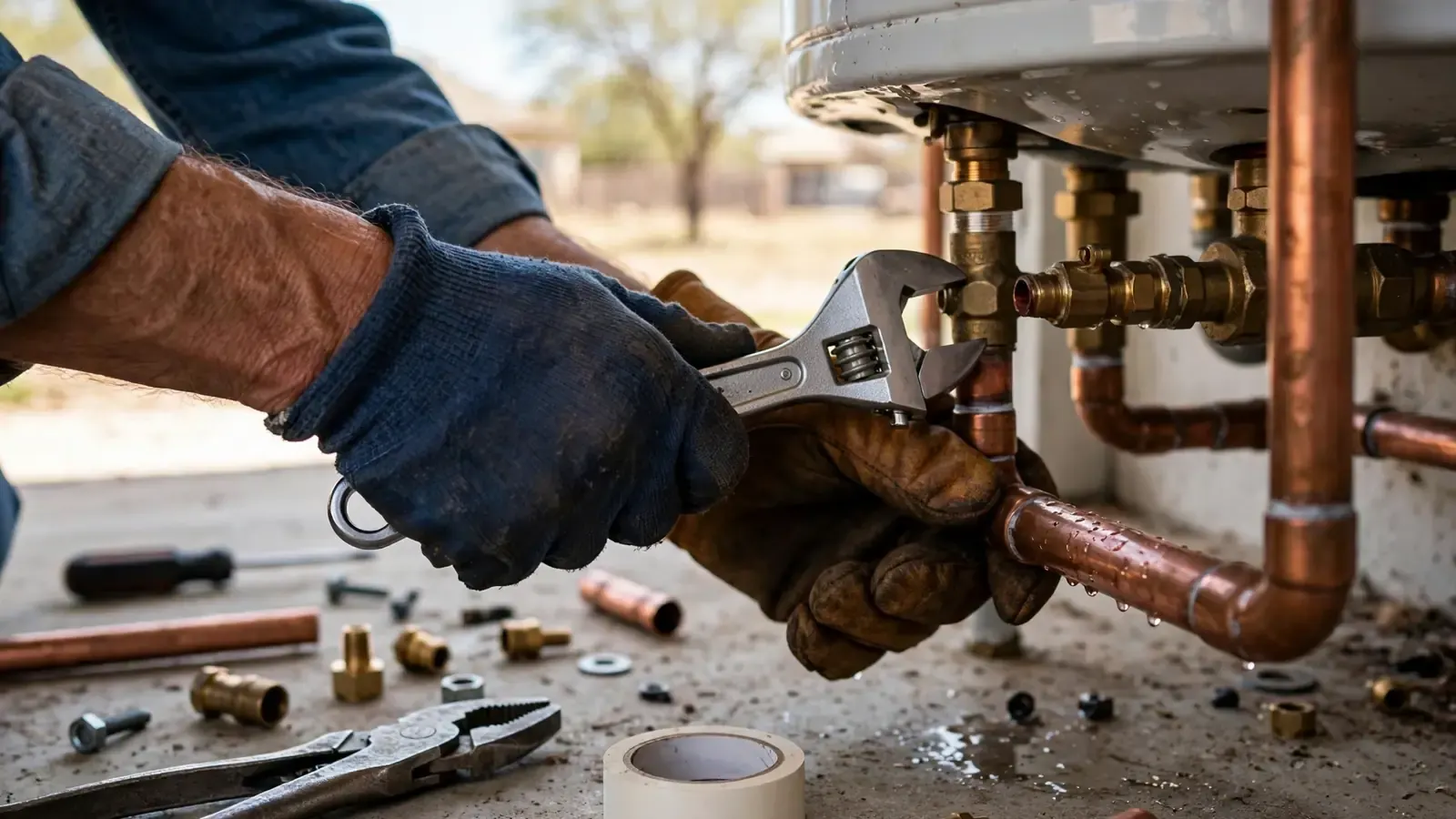
Water around the tank: what to do before we get there
These steps take a couple of minutes and keep a small leak from becoming a flooded utility room.
- ✓Close the cold supply.The shutoff valve sits on the pipe feeding the top of the tank. Turn the handle until it stops. That ends new water reaching a leaking shell.
- ✓Cut the power.On an electric unit, switch off its breaker. On a gas unit, turn the control to off or pilot. An electric element left on in an emptied tank burns out quickly.
- ✓Smell gas? Leave.Do not touch switches or use a phone inside. Get everyone outdoors and call the gas utility or 911 from outside. Call us once the building is safe.
- ✓Protect the floor.Move boxes, stored clothes, and cardboard away from the water. Towels or a shop vacuum at the edge keep it out of finished rooms.
If water keeps appearing while the heater stays dry, the source may be a supply line, which is a job for leak detection. Tell us whether the water comes from the seam, the top pipes, or the relief valve drain.
Hot water trouble and what it often points to
No hot water at all
On electric units a tripped breaker or a dead element is common. On gas units the pilot or thermocouple is a frequent suspect. Many of these are quick repairs.
Warm, but never hot
One failed element or a burner buried in sediment can leave the tank half heated. Showers start fine and fade to lukewarm.
Rumbling or popping
Sediment at the bottom traps steam bubbles as the water heats. An early flush helps. A thick crust may mean the tank is past it.
Rusty hot water only
If the cold side runs clear, the tank lining or anode rod is likely corroding. Treat it as a warning about the tank's remaining life.
A puddle underneath
A loose fitting, a weeping relief valve, and a rusted shell all leave water on the floor. Each one calls for a different fix.
Hot water that runs out fast
A broken dip tube lets cold water mix in near the top of the tank. It is a modest repair on a tank that is otherwise sound.
Not sure which symptom you have?
Describe the sound, the puddle, or the temperature when you call (440) 468-0237. We will say whether it sounds like a repair visit or a replacement talk, and we book the same day when we can.
Repair or replace: a quick read on the tank
| What you notice | Often repairable | Often points to replacement |
|---|---|---|
| Cold or lukewarm water | Failed element, thermostat, pilot, or thermocouple | Tank is also leaking or heavily corroded |
| Puddle at the base | Loose fitting, bad drain valve, or relief valve | Water seeping from the tank body or seam |
| Rusty hot water | Worn anode rod on a tank that is still sound | Rust flakes plus age and sediment buildup |
| Rumbling noise | Early sediment that a flush can clear | Thick scale that will not flush out |
| Short supply of hot water | Broken dip tube or one weak element | Tank too small for the household |
A seam leak cannot be patched. Once the steel shell lets water out, the useful question becomes what goes in its place. We lay out both paths at your house and state the price before work starts. The swap side lives on our water heater replacement page.
How a repair visit runs
- 1
Find the failure
We check power or gas, the controls, the fittings, and the tank itself. The goal is the real cause, not a guess.
- 2
Say what we found
You hear the diagnosis and the price for the fix before we start it. Same-day parts runs happen when stock allows.
- 3
Repair the part
Elements, thermostats, valves, and thermocouples are the usual work. We test for heat and look for leaks before we leave.
- 4
Tell you what comes next
If the tank is near the end, we say so plainly. The decision stays with you.
What Solon's water does to a tank
Cleveland Water supplies Solon from Lake Erie and describes its water as about 7 grains per gallon, which it calls moderately hard. Hardness minerals settle as scale on heating elements and in the bottom of a tank. So when a Solon heater runs cold or rumbles, scale is a fair first suspect.
If your home has a water softener, tell us on the call. Softening changes how the anode rod wears, so we inspect it with that in mind. A tap test with a hardness strip tells you where your own house stands.
What shapes a water heater repair bill
Homeowners policies usually cover sudden, accidental water damage but not wear, neglect, or the failed part itself, so check your policy. Photos of the damage help if you file a claim.
Hot water problems, answered for Solon homes
Yes. Dispatch runs around the clock, so a split tank at midnight gets the same answer as one at noon. Call (440) 468-0237, tell us what you see, and we book the earliest visit we can, same-day when available.
Close the cold supply to the tank while you wait.
Often it is a fitting on the inlet or outlet pipes, or a relief valve that is dripping. Water can run down the jacket and look like a body leak. We check the connections first because those are fixable.
Many gas models print relighting steps on the tank label. If the flame keeps dying, a worn thermocouple or a draft problem is likely. Never keep trying if you smell gas. Leave the building and call the gas utility or 911.
Usually it is sediment, not danger. Scale collects at the bottom and traps steam as the burner or element heats. If the noise is loud and water is also leaking, shut the unit off and call us.
Yes. Error codes, scale, and weak flow are the usual reasons for a call. Our tankless water heater page explains how a flush works and when it helps.
Policies vary. Many cover sudden water damage but not the heater itself when it simply wore out. Read your policy and ask your agent before you file.
Sources and standards behind this page
Local facts and rules on this page come from these public sources. Check the current version before relying on a permit or code detail.