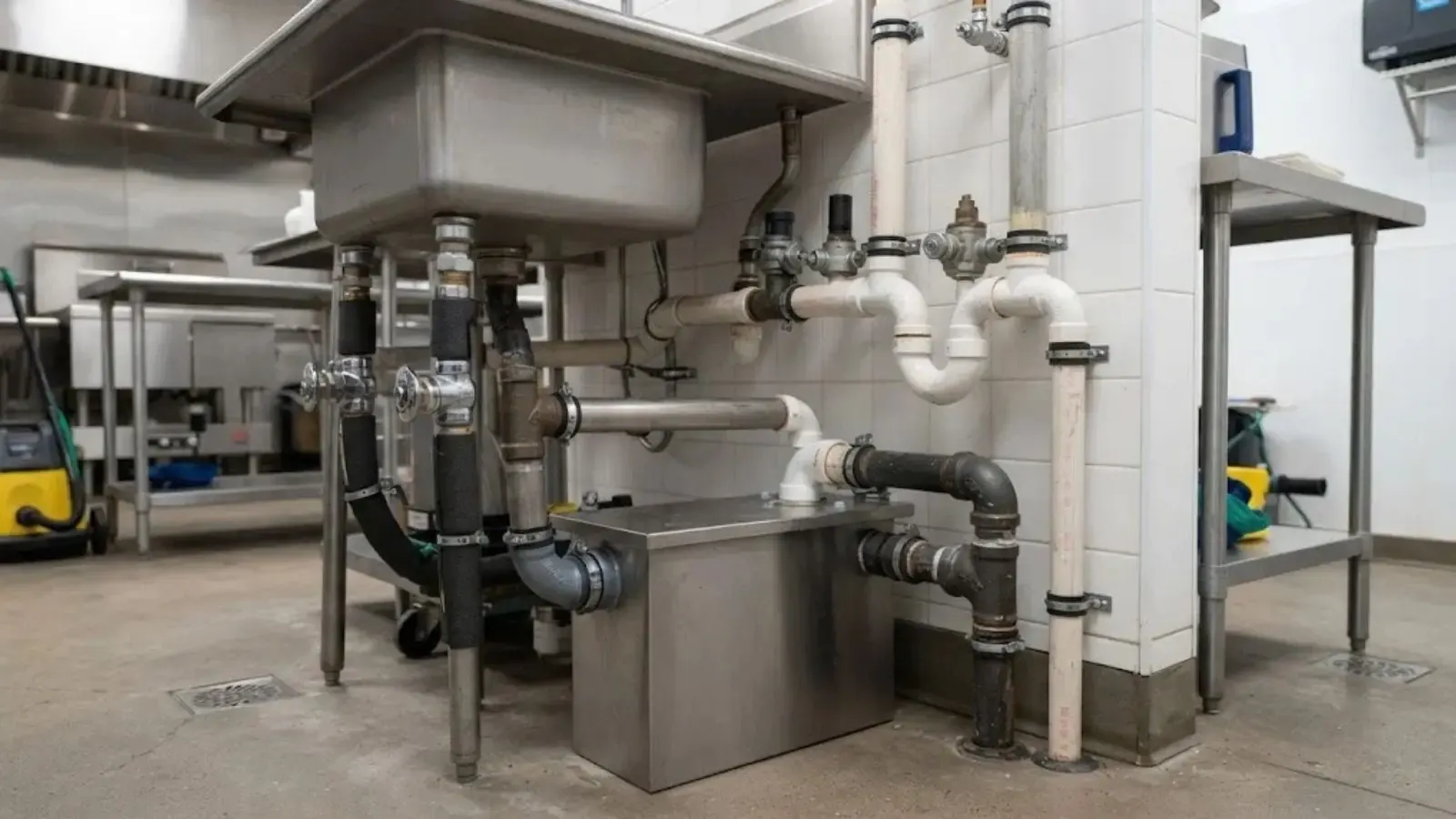
A shop, office, or suite with no water or a flooded floor
Start by finding the main shutoff for your suite or building. In a multi-tenant property, that valve may be in a utility closet or a shared room, so ask your property manager if you do not have access. Keep the electrical panel and floor outlets dry, and move paper, inventory, and equipment up off the floor.
Tell the dispatcher the type of space, whether the water is clean or sewage, and who holds the key or lease. A clean-water break and a floor-drain backup need different equipment. Having a contact for the landlord or property manager speeds up access.
Common commercial calls and the first move
| Situation | First move | Who to notify |
|---|---|---|
| Floor drain overflowing | Stop water use, keep the area clear | Property manager, then us |
| Restroom toilets backing up | Close restrooms, stop flushing | Building owner or manager |
| Burst supply line | Close the main shutoff | Landlord and your insurer |
| No hot water for the staff or kitchen | Check the breaker or gas supply | Us if it does not restore |
| Slow leak behind a wall or ceiling | Photograph it, place a bucket | Landlord, then schedule a visit |
If you smell gas, leave the building and call the gas utility or 911 before anything else.
Working around your open hours
Most businesses cannot close for a day. We schedule repairs to fit around deliveries, service hours, and staff, and after-hours dispatch lets us work when the doors are locked. Same-day visits are possible when the schedule allows, and the dispatcher will tell you honestly when that is not the case.
For recurring slow drains or stoppages in restrooms and kitchens, a drain cleaning visit may clear the line. If the cleaning shows a collapsed or root-filled pipe, we discuss sewer line repair with the camera footage in hand.
Managing more than one tenant?
Tell us which unit is calling and who approves work. Landlords and tenants both call us, and we confirm approval before anything is billed.
From first call to sign-off on a commercial job
- 1
Dispatch intake
We ask about the building type, water source, shutoffs, and access. That sets the crew and the equipment.
- 2
On-site diagnosis
We find the source, protect what we can, and shut off the failed section so the rest of the suite keeps working.
- 3
Clear price before work starts
The decision maker hears the scope and the price. If a landlord must approve, we wait for that call.
- 4
Repair and documentation
We repair, test, and write up what we found so you have a record for your landlord or insurer.
Registration, permits, and backflow in Solon
Solon requires contractors to register with the city every year and show a current Ohio plumbing license before they work in the city. Ask any plumber for proof, and verify a license through the Ohio Construction Industry Licensing Board's online look-up.
Irrigation systems on commercial lots usually have backflow devices. Solon requires a permit for an irrigation backflow device, and Ohio's rule for backflow preventers calls for testing at least every 12 months. Cleveland Water asks for annual testing by a plumber, so check which of those applies to your meter before a test is due.
Tenants, owners, and who pays
Lease terms decide who pays for a plumbing failure, and we do not guess at them. Many leases make the landlord responsible for the supply and drain lines in the walls and the tenant responsible for fixtures inside the suite. Read the lease, call the property manager, and ask before the work starts so the invoice goes to the right place.
If you are the one paying, tell us when you call. We write the price in plain terms and explain what we found, so you can pass the details on. Projects that add fixtures, such as a new break room sink or restroom, fall under plumbing installation.
What drives a commercial plumbing price
Commercial property and business-interruption policies often cover sudden, accidental water damage but not wear, neglect, or the failed part itself. Check your policy and your lease, and keep photos of the damage.
Why older Solon buildings call for a closer look
Solon's industrial growth began in the 1960s, when the first of its industrial parks was built off Solon Industrial Parkway. Buildings from that era and the decades after often have original supply and drain lines. If your building is that old, ask us to look at the pipe type and condition when we are on site.
Commercial plumbing questions from Solon businesses
Yes. A burst line, a flooded floor, or a sewage backup in a business gets after-hours and same-day dispatch. Tell the dispatcher who can authorize the work and who can give access to the building, since that often decides how fast the crew can start.
Often, yes. Repairs that can wait until closing time can be booked then. If the failure cannot wait, we stage the work to keep as much of the space open as we can.
Yes. Many of our commercial calls come through managers on behalf of tenants. We confirm who approves the work and who receives the invoice before we begin.
Backflow testing is a standard part of many commercial properties. Ask about it when you call so we can confirm how it fits your meter and your permit situation.
Yes. Stoppages in floor drains, restroom lines, and kitchen drains are common calls. We clear the line, camera it if needed, and tell you whether the problem is local or in the main.
Yes. We give a clear price before work starts, written so you can share it with an owner or insurer. If the scope grows, we stop and talk first.
Sources and standards behind this page
Local facts and rules on this page come from these public sources. Check the current version before relying on a permit or code detail.