Signs the water is escaping where you cannot see it
Meter dial moving with everything off
Every tap, appliance and ice maker is closed and the dial still creeps. Water is leaving the system somewhere past the meter.
A bill that jumped for no reason
Nobody added a guest or ran a hose, yet the number climbed. Cleveland Water bills quarterly, so a small steady leak can run for weeks before the bill shows it.
A warm patch on the floor
Warmth under tile or carpet often means a hot line is leaking beneath it. A faint hiss behind a wall points the same way.
Musty smell or bubbling paint
Moisture has been traveling for a while. Water follows framing, so the stain can sit several feet from the real source.
Weak pressure at every fixture
When the whole house loses pressure at once, suspect the supply line before you blame one faucet.
A meter that keeps spinning after every tap is off
Find your water meter. Cleveland Water's connection standards call for it within 36 inches of the basement floor, so look low on the wall where the line comes in. Shut off every faucet and appliance that uses water, then watch the small dial or triangle. Movement means water is escaping on the house side of the meter.
Write down the reading, wait an hour with nothing running, and read it again. A change tells us the leak is real and helps us decide whether to start at the meter or inside the house. It is a two-minute check that can catch a problem months before a quarterly bill would. If the pipe has already split, our burst pipe repair crew takes over.
How we hunt a leak without opening every wall
- 1
Isolate the system
We close sections one at a time and watch the meter. That tells us whether the loss sits on the service line, in the supply piping or behind a single fixture.
- 2
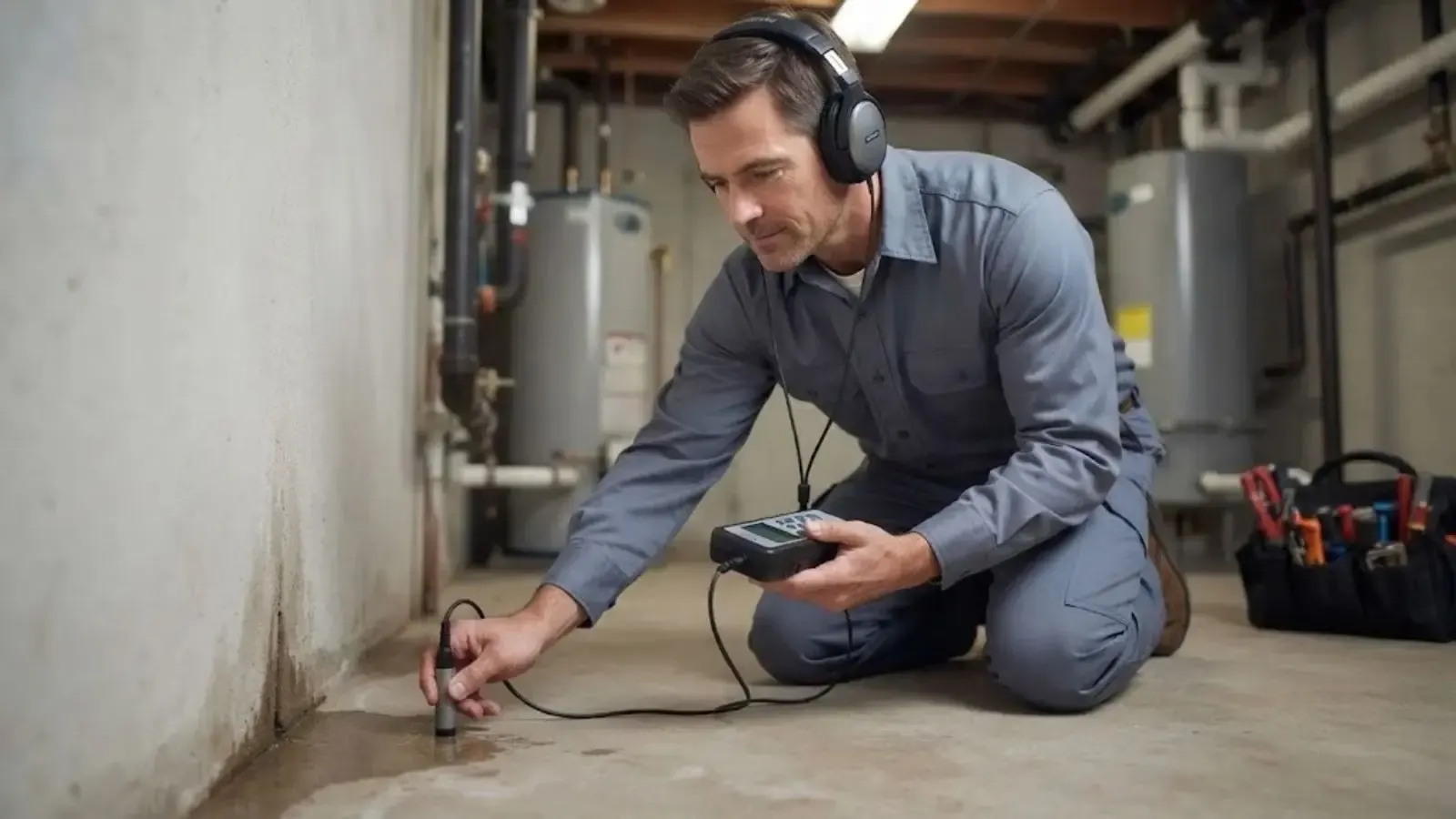
Listen and scan
Acoustic gear picks up the sound of escaping water through pipe and floor. A thermal camera shows cold or warm spots that dry surfaces hide.
- 3
Pressure test the suspect run
We cap the section and hold pressure. A line that will not hold narrows the search to one stretch of pipe.
- 4
Open the smallest access we can
Once the spot is pinned down, we cut only there. You get the repair plan and the price before any tool touches your wall.
A leak found at 2 a.m. costs less than the one found at breakfast
Night and weekend calls reach the same dispatch line, and we book same-day visits when the schedule allows. Call (440) 468-0237, describe the meter or the stain, and we will line up a crew.
Where the water shows up and what it usually means
| What you notice | Likely source | How we confirm it |
|---|---|---|
| Meter moves, no wet spots | Underground service line or a pipe in the slab | Isolation test and acoustic listening |
| Stain on a ceiling below a bathroom | Supply line, drain line or a tub or shower pan | Moisture meter and pressure test |
| Warm patch on the floor | Hot water line running under the floor | Thermal camera and listening |
| Damp basement wall on the street side | Service line entry or groundwater seeping in | Meter test and a close look at the wall |
| Hissing only when one fixture runs | Fixture supply line or shutoff valve | Close each valve and watch for movement |
Not every damp spot is a pipe. Groundwater and a tired pump can look the same, so we rule those out before we cut. If the water is coming from outside the foundation, we will say so and point you toward sump pump repair instead.
Whose pipe is leaking in your yard
Cleveland Water's connection standards say the city-owned part of the service line runs from the main to the curb stop. From the back of the curb stop to your house, the pipe is yours. That split decides who pays for a yard leak, so we locate the break first and then tell you which side it is on.
Before anyone digs to reach it, Ohio811 asks for notice at least two working days ahead, and dialing 811 is free. We plan around that. Outside repairs get scheduled properly, and we work on stopping the loss from inside the house in the meantime.
What to do while we are on the way
- ✓Shut off the main.Cleveland Water says the master valve usually sits where the line enters the basement or crawl space. Turn it clockwise until it stops.
- ✓Open one low faucet.Draining the lines relieves pressure and slows whatever is leaking.
- ✓Stay away from wet electrics.If water is near an outlet or panel, keep clear and shut that breaker only if you can reach it while standing on dry ground.
- ✓Move valuables and take photos.Lift items off wet floors and photograph the damage, because your insurer will ask for it.
- ✓Leave the walls alone.Cutting drywall yourself spreads water and erases the clues we use to trace the source.
If you smell gas or hear hissing near a gas appliance, leave the building and call the gas utility or 911 before you call us.
What decides the price of finding a leak
Tracing a leak is billed differently from fixing it, and we separate the two so you can see each part before you agree.
Homeowners policies usually cover sudden, accidental water damage but not wear, neglect or the failed part itself. Ask your insurer whether the search cost is included before the visit.
Hidden leak questions from Solon homeowners
Yes. Dispatch answers around the clock, and a leak that is still running is treated as urgent. Shut the main valve first, then call, and we will tell you what we can do tonight and what can safely wait until morning.
Do the meter test with every tap off. If the dial moves, the loss is on the house side of the meter, and we then look at the pipe from the curb stop inward, which is your responsibility. Anything on the main or the part up to the curb stop belongs to Cleveland Water.
We try not to. Listening gear and a thermal camera usually narrow the spot to a small area, and we cut only there. If the leak sits under a slab or behind tile, we explain the options and the price before touching anything.
A running toilet, a pinhole in a buried line or a leak inside a wall can all hide. Because the bill arrives quarterly, the extra use can pile up before you notice. The meter test is the fastest way to separate a real leak from a high-use month.
Yes. Supply lines that run under a slab can wear through, and the clue is often a warm floor or a meter that moves with nothing on. Whether your home has a slab or a basement changes where we look, so tell us what you have when you call.
Yes, with the price explained first. If the pipe is failing along its whole length, patching one spot only delays the next leak, and we will talk through repiping so you can compare.
Sources and standards behind this page
Local facts and rules on this page come from these public sources. Check the current version before relying on a permit or code detail.