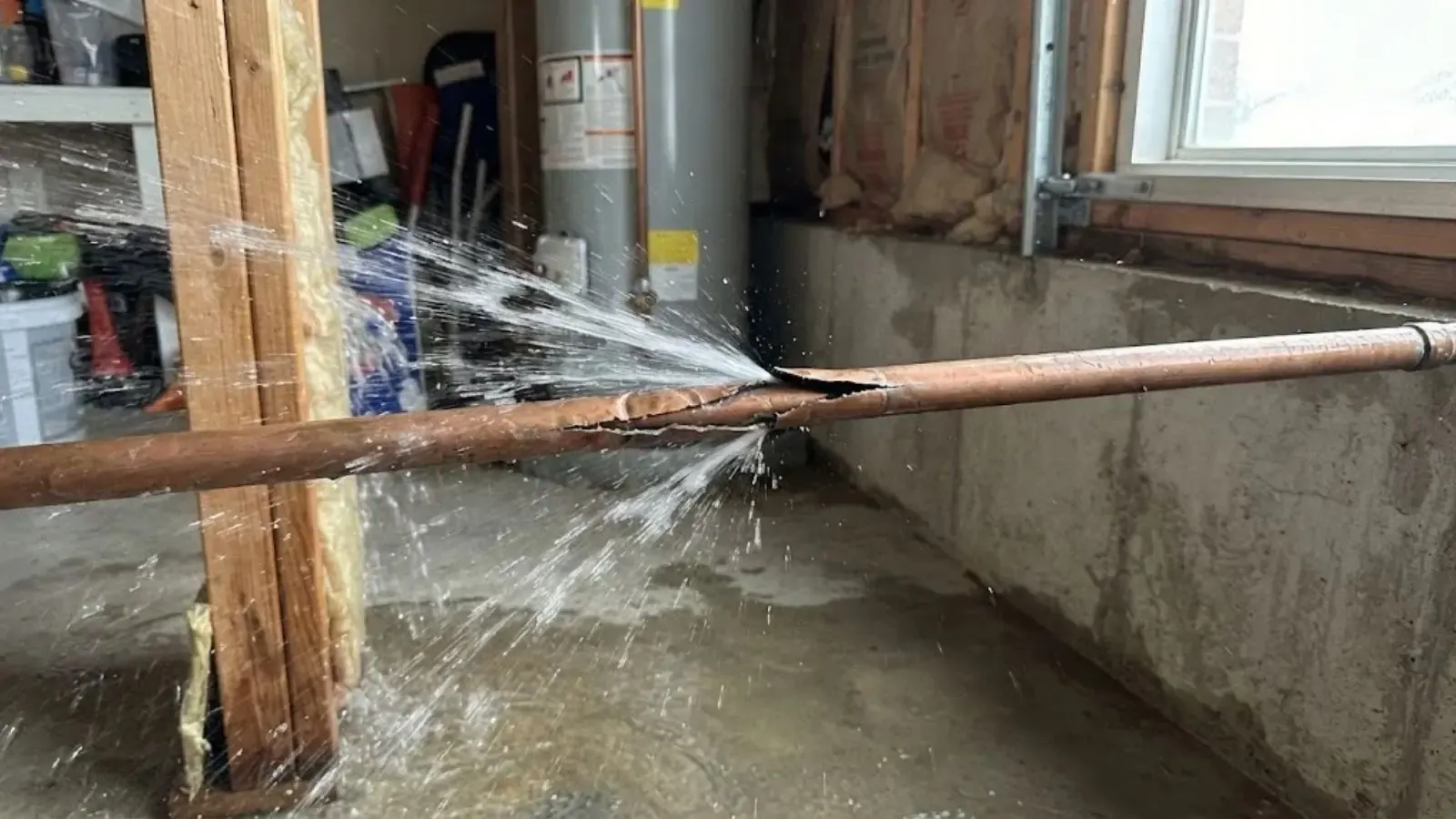
How to tell a pipe is frozen
The first sign is usually a faucet that gives you a weak stream or nothing at all while others still work. Frost on an exposed pipe, a bulge in the line, or a metallic smell from the tap are other hints. If only the hot or only the cold side is dead, the frozen section is on that line.
Frozen pipes usually sit where cold air reaches them. Look along exterior walls, in unheated garages, crawl spaces, and near the rim joists in a basement. Pipes feeding outdoor spigots are common trouble spots too.
What to do the moment water stops
Do these in order, and keep the heat on in the house.
- Open the affected tap.. Leave it open so melting ice and trapped pressure have somewhere to go.
- Find the main shutoff.. Cleveland Water notes that the master shutoff is typically where the water line enters the basement or crawl space from the street. Know where it is before you need it.
- Look for water first.. If you see a wet ceiling, a spray, or a puddle near the pipe, close the main valve and call. A frozen pipe that has already cracked will flood when it thaws.
- Warm the room.. Open cabinet doors under sinks on exterior walls and raise the thermostat a few degrees.
- Apply gentle heat.. Use a hair dryer, a heating pad, or warm towels, starting near the tap and working toward the frozen spot.
What never to use on a frozen pipe
Skip torches, heat guns, and kerosene heaters. Fast heat can crack a pipe, scorch framing, or ignite insulation. Even a propane torch on copper can start a fire inside a wall.
Space heaters work if you set them on a hard floor and keep them well away from anything flammable. Never leave one running unattended. A hair dryer is slower, but it is far safer.
Do not use salt, antifreeze, or chemicals in a drinking water line. They are not made for it and can contaminate the supply.
Frozen, cracked, or burst: how to tell the difference
| What you see | What it likely is | Your next move |
|---|---|---|
| No water at one tap, no wet spots | Frozen but intact | Thaw slowly with a hair dryer |
| Water stains on a ceiling or wall | Cracked pipe, possibly thawing | Shut off the main and call |
| Sound of running water with taps closed | Active leak | Shut off the main and call |
| Frost on pipe, no water in the whole house | Service line or main shutoff frozen | Call the water utility or a plumber |
| Bulging or split section of pipe | Burst pipe | Shut off the main, do not thaw |
Thawing a split pipe makes the flood worse. When you see damage, shut off the water first and let a plumber handle the repair.
What Northeast Ohio winters have done to local water lines
Cleveland Water, which supplies Solon, says the frost depth in northern Ohio is 3 to 3 1/2 feet, and its mains are buried more than 5 feet deep. Your service line from the street is shallower than the main, and your indoor pipes are not buried at all. That is why freezing trouble shows up inside homes first.
In the first five days of January 2018, Cleveland Water reported over 100 active main breaks in its system. February 2015 was Cleveland's coldest February on record, with an average of 14.3 degrees and a low of minus 17 on the 20th, according to the National Weather Service. Both are reminders that long cold snaps stress buried and indoor pipes alike.
Cleveland Water's curb stop marks the line between city and owner. The owner is responsible for the pipe from the curb stop to the house. If a frozen service line is the problem, call a plumber to find out which side of the stop it is on.
No water, frost on the pipe, and no idea where to start?
Call (440) 468-0237 any hour of the day or night. We will help you decide whether it is a thaw job or a shutoff-and-repair job.
Where pipes freeze first in a Solon house
Garages and exterior kitchen walls top the list. A sink on an outside wall has supply lines running through the coldest space in the house. Cabinet doors closed on that wall keep warm air out.
Basements are not safe by default. Pipes along rim joists, near window wells, or beside a leaky sill plate see drafts all winter. Unfinished crawl spaces and utility rooms carry the same risk.
Outdoor hose bibs deserve their own mention. A hose left attached can trap water inside the spigot and split the pipe behind the wall. Disconnect hoses in the fall and shut off any interior valve to the spigot if you have one.
Prevention that costs very little
- Disconnect garden hoses and cover or shut off exterior spigots before the first hard freeze.
- Wrap exposed pipes in foam sleeves, especially in garages, crawl spaces, and along exterior walls.
- Seal drafts around pipe entry points with caulk or spray foam.
- Let a faucet drip during a deep freeze. Moving water is slower to freeze, and the drip relieves pressure.
- Keep the thermostat at a steady temperature if you travel, and ask a neighbor to check the house.
None of these is a promise against freezing. A very long cold snap can beat every precaution, so know where your main shutoff is.
What shapes the cost when a pipe does burst
The price depends on how much pipe is damaged, how hard it is to reach, and what material it is made from. A split in an open basement run is a short job. A burst behind a finished wall means opening drywall and repairing it afterward.
Water damage cleanup is usually a separate matter from the plumbing repair. Homeowners policies usually cover sudden, accidental water damage but not wear or neglect, so check yours and take photos before cleanup.
When to call a plumber, and who to call
If you can reach the frozen section and there is no sign of damage, a careful thaw is reasonable. If you see damage, cannot find the freeze, or the whole house is without water, call for burst pipe repair. If a freeze keeps recurring in the same spot, repiping the exposed run may be the real fix.
We serve Chagrin Falls and Bedford Heights, along with Solon itself. Call (440) 468-0237 when pipes freeze in the middle of the night.
Frozen pipe questions
There is no fixed time. Water expands as it freezes, and pressure builds between the ice and the closed faucet. A pipe may crack when ice forms or only when the ice melts.
Yes, in a deep cold snap. A slow drip relieves pressure and keeps water moving. It does not guarantee protection, so insulate exposed pipes as well.
You can raise the room temperature and open cabinets, but you cannot safely heat a pipe you cannot see. If the wall is cold and the pipe is dead, call a plumber.
Check whether neighbors are affected, since it could be a main break. If not, the freeze may be in your service line or your main shutoff. Call the water utility or a plumber.
Cleveland Water says it is typically where the water line enters the basement or crawl space from the street. Label it now, and test it once a year so it turns when you need it.
Many policies cover sudden, accidental damage from a burst pipe, but not the pipe itself or damage from neglect. Read your policy or ask your agent.
Sources and standards behind this page
Local facts and rules on this page come from these public sources. Check the current version before relying on a permit or code detail.