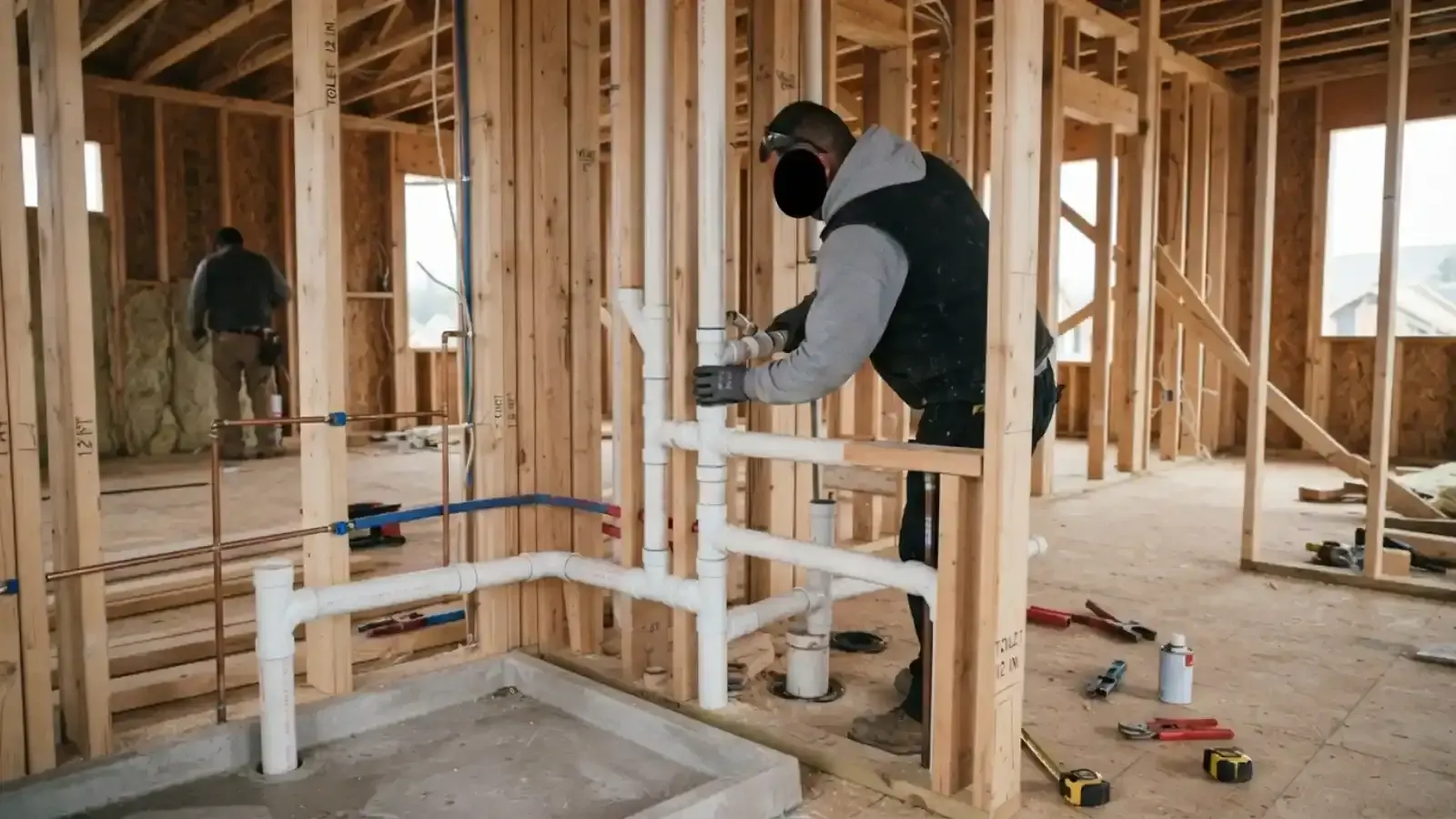
What the vent pipe does
Every drain in your house needs air behind the water. When water runs down a pipe, it pulls air with it, and without a vent the drain would suck itself shut and glug. The vent pipe lets outside air in at the top, so water flows smoothly and the water seals in your traps stay put.
The vent also lets sewer gas escape up above the roofline instead of into your rooms. Most homes have one or more vent stacks that rise inside the walls and exit through the roof. Some fixtures also have smaller branch vents that tie into the stack.
When that pathway gets blocked, the drain system starts to behave oddly. The symptoms often look like a drain clog, which is why this problem is easy to misdiagnose.
Signs the vent is blocked
One sign alone proves little. Two or three together point to the vent.
- Gurgling.. A glugging sound from the sink or shower when the washer drains or a toilet flushes.
- Slow draining in several fixtures.. The drains are clear when snaked, but flow stays sluggish.
- Toilet bubbles or flushes weakly.. Air burps up through the bowl as water leaves.
- Sewer smell.. Odor near drains, because trap seals are being siphoned dry.
- Empty traps.. A sink trap that has lost its water, which you can see when you look into a rarely used drain.
Why vent pipes clog
The top of a vent is an open pipe on a roof, and things find their way in. Leaves, pine needles, twigs and bird or squirrel nests are the common blockers. A tennis ball or a wasp nest is not unheard of. Roofing work can also leave debris or a displaced flashing boot over the opening.
Inside the house, vents can be crushed or disconnected during remodeling. A new wall can cut a branch vent, and a poorly glued joint can leave it open. These cases show up shortly after construction and need a plumber to trace the vent path.
Frost is the winter culprit. Moist warm air rising from the house condenses and freezes at the top of the pipe, and the opening narrows ring by ring until only a pinhole remains. Small-diameter vents, those two inches and under, are most vulnerable.
Why Solon winters raise the odds of frost closing a vent
Cleveland Water says northern Ohio frost depth runs 3 to 3.5 feet. NWS records at Cleveland Hopkins airport show 63.8 inches of snowfall in a normal year and a January average low near 22 degrees. Solon sits in the snowbelt east of the airport, so its own numbers are not the same, but the pattern is similar.
For you, a slow or gurgling drain on a bitterly cold morning that clears up by afternoon is a classic frost-closed vent. The pipe thaws as the day warms. If it recurs every cold snap, a plumber can fit a larger diameter section at the roof to resist closing. Check the roof opening only when it is dry and safe.
Safe ways to check
Start from the ground. From the yard, look up with binoculars to find the vent stack and check the opening for nests, leaves or a layer of frost. Do not climb on a snowy, icy or wet roof. A fall costs more than any plumbing bill.
If the roof is dry and you are comfortable on a ladder, remove loose debris with a gloved hand. Then run a garden hose down the pipe at low pressure. If water backs up and pools at the top, the blockage is deeper. If it drains freely, the top was the problem.
Use a plumber's snake only if you know what you are doing. A cable pushed down the wrong way can pierce a joint or a fitting, and a dislodged plug can drop to a bend and create a worse clog.
Vent clog or drain clog
| Clue | Vent problem | Drain clog |
|---|---|---|
| Where it shows | Several fixtures at once | Usually one fixture |
| Sound | Gurgles in nearby drains | Water backs up at the fixture |
| Timing | Worse when other water runs | Constant |
| Weather link | Worse in a freeze | None |
| A snake cures it | Rarely | Often |
| Smell | Possible sewer odor | Usually none |
If a snake clears one drain and the gurgle remains somewhere else in the house, suspect the vent.
What a plumber does about it
A plumber starts by confirming it is the vent and not the drain. A drain camera, as used in a sewer inspection, or a smoke test shows whether the vent path is open from fixture to roof. Smoke pumped into the system rises through open vents and shows leaks or breaks along the way.
Clearing the top may take a few minutes with a roof-level cable or a water flush. Breaks in the pipe inside walls take more work and may involve opening drywall. We explain what is needed and give the price before work starts.
If the line shares a problem with the sewer lateral, drain cleaning may be part of the answer. A vent that is open and a main line that is clogged can look nearly identical from the bathroom.
Codes and permits to know about
Solon has adopted the Ohio Plumbing Code in its city ordinances, and the state's 2024 edition took effect March 1, 2024. The code is what sets vent sizes and how far a fixture can sit from its vent. A plumber who knows the current code can tell you if a vent you plan to add or move will pass.
Solon's Required Residential Permits Guide lists a permit for new plumbing installations and for extending or running a new plumbing line. Adding a vent usually means extending the line. For a plan, ask the city Building Department which permit applies. Solon also requires contractors to register with the city and show a current Ohio license, so ask to see both.
Do not cap a vent to stop a smell
Plugging or capping a vent to stop an odor makes drains worse, since the system loses its air supply. If you smell sewer gas, refill unused traps with water and call. A strong odor with no explanation can mean a broken drain or vent and should not wait.
Serving nearby towns too
We see the same vent and drain problems in Chagrin Falls and in Bedford Heights, where homes of different ages have different vent layouts. If you need to know which pipes are involved, a plumber can trace them in a single visit.
What people ask when drains gurgle
It can slow a toilet and make it bubble, though a true backup usually points to a drain clog. A blocked vent mostly causes gurgling and slow flow.
Look for a round pipe, often three or four inches wide, poking out of the roof near the bathrooms or kitchen. There can be more than one.
Sewer gas contains gases that smell bad and can be harmful in large amounts. A small whiff from a dry trap is a nuisance, but a strong or persistent odor needs to be checked.
If the roof is dry and low-pitched, you can remove debris from the opening. For anything deeper or any icy surface, hire a plumber.
Often yes, as the day warms. If it keeps closing in cold weather, the pipe may be too narrow at the roof and should be enlarged.
The city lists new or extended plumbing lines as permit work. A simple cleaning does not change the pipe. Ask the Building Department about a specific change.
Sources and standards behind this page
Local facts and rules on this page come from these public sources. Check the current version before relying on a permit or code detail.