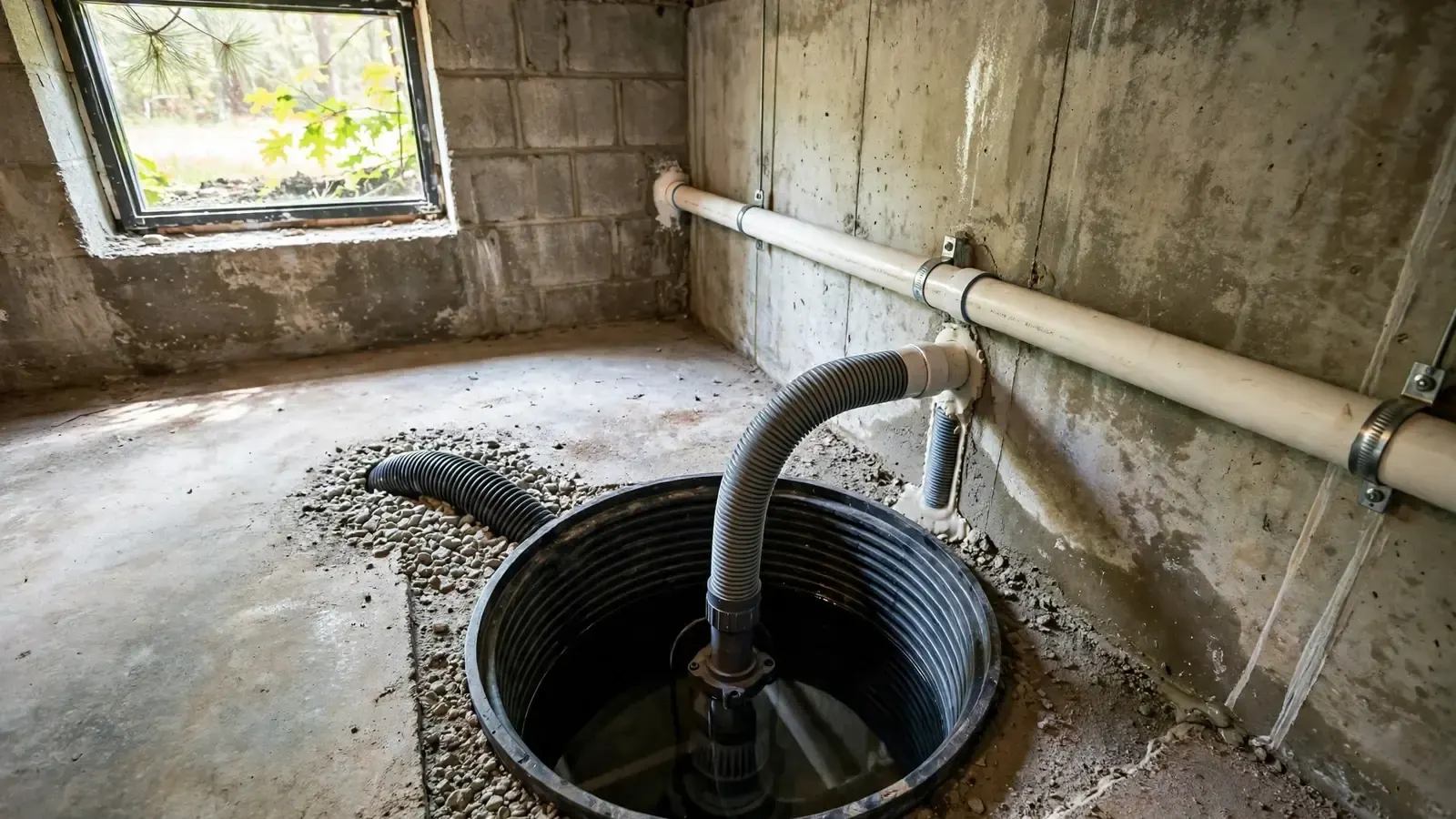
The short answer on sump pump pricing
Replacing a pump in an existing pit is the smallest job. Digging a new pit, breaking the slab and running new discharge pipe is the largest. Most installations land somewhere between those two, and the difference comes from a handful of choices you control.
That is why quotes vary so much online. A number that covers a pump swap says nothing about a first-time install with a drain loop around the footing. When you compare quotes, compare the scope line by line, not the bottom number alone.
Cost factors in order of impact
Here is how each factor pushes the price up or down.
| Factor | Raises the price when | Lowers the price when |
|---|---|---|
| Existing pit | No pit, new hole must be cut | A usable pit and liner are in place |
| Pump type | Higher horsepower, cast iron body, sealed lid | Basic thermoplastic pump on a small pit |
| Discharge route | Long run, trenching, a sealed line through a wall | Short run out the nearest wall |
| Backup system | Battery or water-powered backup added | Primary pump only |
| Floor and access | Thick slab, tight access, finished room | Bare slab, open access |
| Drain tie-in | Interior drain channel to feed the pit | Pit collects water by itself |
Pump type and size
A submersible pump sits inside the pit, under water, and runs quietly. A pedestal pump sits on a column above the pit and is easier to service but louder and exposed. Most new installs in finished basements use submersibles for the lower noise.
Horsepower matters less than most people expect. A third or a half horsepower handles typical house water. The flow you need depends on how much water enters and how high the pump must lift it. A pump that is too small keeps running, and a pump that is too large short-cycles and wears out.
Switch type is another small detail with big results. A float that jams against the side of the pit is a common cause of failure. Many installers now choose a vertical float or a solid state switch that is less likely to snag.
The pit, the liner and the lid
If a pit exists, a plumber can inspect it and reuse it when the liner is sound. If it is cracked, clogged with silt or too shallow, a new liner is cheaper than replacing the pump twice. A pit is typically about two feet deep and about eighteen inches across, though sizes vary.
A sealed lid keeps humidity and radon-bearing soil gas out of the room and keeps the sump from becoming a place for children or pets to fall. It adds modest cost and makes the basement more pleasant. If a pit sits in a finished area, the lid is nearly always worth it.
Solon rules to plan around
Solon's sewer chapter says foundation drains shall not be tied into the sanitary sewer. For your project, this means the sump discharge cannot go into the sewer line, so the discharge route is outdoors. Because a long outdoor run costs more than a short one, ask your plumber where the water will go before you accept a quote.
The city encourages downspout disconnection and says some drainage projects may need a permit. We did not find a published Solon rule on the exact discharge point for a sump pump, so we recommend a call to the city Building Department. Solon also requires contractors to register with the city and show a current Ohio license, so ask for both. Digging outdoors needs an 811 call at least two working days ahead.
Discharge line and where the water goes
The discharge pipe carries water from the pump to a point outside, away from the foundation. A short, direct run through the rim joist is cheapest. A longer run, a buried line, or a pipe that must pass under a deck or patio adds labor and materials.
A check valve on the discharge line keeps water from running back into the pit when the pump stops. Without one, the pump cycles on and off with every column of water, and it wears out. Pipe needs to slope away from the house, and the outlet should end where water will not run back to the wall.
In freezing weather, a discharge line can ice over. Pick an outlet that sheds water over open ground, and ask about a freeze relief opening so the pump has somewhere to push water if the end freezes shut. Water that cannot leave the line backs up into the basin.
Backup power and a second pump
Storms that bring the most water often knock out power. A battery backup pump takes over when the main pump fails or the power goes out. A deep cycle battery usually runs a pump for several hours of continuous pumping, which is longer than most storms last at peak.
A water-powered backup uses your municipal water pressure to draw water out of the pit. It needs no battery, but it uses water while running and only works if the home is on city water. Ask your water utility whether it allows one before choosing it.
A second pump in the same pit, placed slightly higher, handles overload. Together with a battery, that is the most protection a homeowner can add. Whether it is worth the added price depends on how often your basement takes on water and what you store down there.
What to ask any plumber before you accept a quote
- Is the pit new or reused?. A reused pit with a cracked liner is a hidden cost.
- Where does the water discharge?. Get a clear route that avoids the sanitary sewer.
- Is there a check valve?. Ask for one on the discharge line.
- Is backup power included?. Find out if it is priced as an add-on.
- Is the contractor registered and licensed?. Ask for the Ohio license and check the Solon registration.
- What does the quote cover?. Wiring, permits if needed, haul-away of the old pump and cleanup.
Cheapest is not always lowest cost
A pump that fails during one storm can cost far more in damaged flooring and stored items than the difference between two quotes. Judge a quote by how well it prevents a flood, not only by the starting number.
Installing versus repairing
If your pump is under about seven years old and the pit is sound, a repair can be enough. A stuck float, a bad check valve or a clogged intake screen are quick fixes. Our sump pump repair work starts with a test of the pump and a look at the pit.
If the pump is old, rusty, noisy or cycling constantly, replacement is the safer choice. If water still enters faster than the pump moves it, the real answer may be a drain channel and a larger system, which is part of basement waterproofing. We explain the options and quote them in writing.
Working across the area
Basement water is common in Bedford Heights, Aurora and around Solon, and many installs follow a basement flood. If your pump has just failed, call for emergency dispatch and we will help you get water out of the pit while you plan the replacement.
Sump pump price questions we hear most
Replacing a pump in an existing pit often takes a few hours. A new pit with a cut slab and a discharge run can take a day or more, plus time for concrete to cure in some cases.
Many pumps run for seven to ten years under normal use. A pump that runs often in a wet basement may wear out sooner.
We did not find a published Solon rule for sump pumps. The city's permit guide covers new plumbing lines and drainage work, so call the Building Department to confirm for your plan.
No. Solon's code says foundation drains shall not be tied into the sanitary sewer. Water must go outdoors.
Policies differ. Many exclude water that backs up or seeps in unless you add specific coverage, and none cover a worn-out pump itself. Read your policy or ask your agent.
A good quote lists the pump, check valve, discharge pipe, wiring, cleanup and any permit work. We give you the price in writing before work starts.
Sources and standards behind this page
Local facts and rules on this page come from these public sources. Check the current version before relying on a permit or code detail.