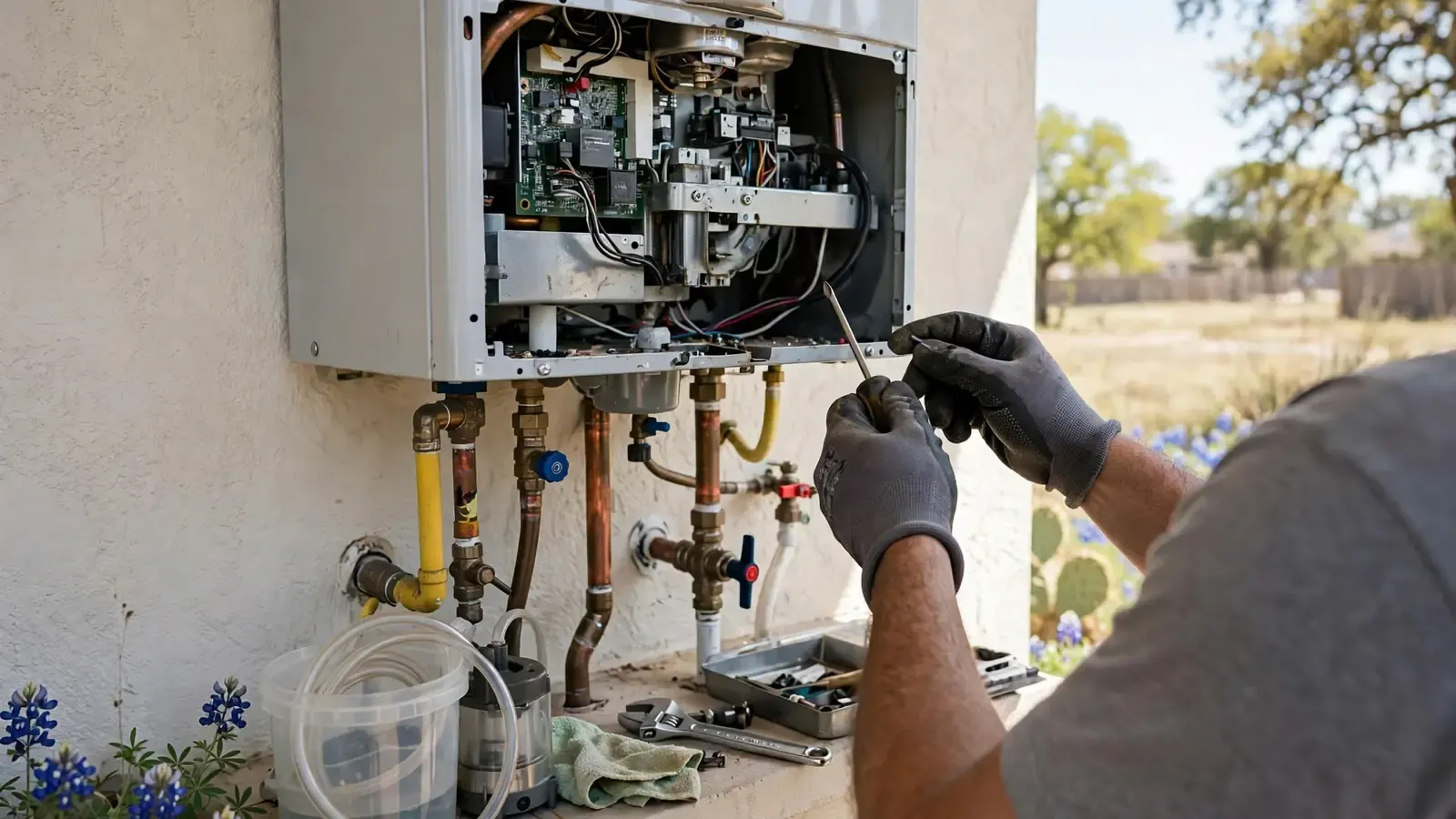
Start with what the heater shows you
Most tankless units have a display that shows a numbered code or a flashing light pattern. Write down the exact code before you do anything else, and take a photo of the screen. Codes point toward ignition, venting, flow, or sensor trouble, which narrows the cause quickly.
Your manual lists what each code means, but codes differ between manufacturers, so a code from another brand's chart can mislead you. If you cannot find the manual, read the model number on the data plate and search the manufacturer's site for the guide.
Five checks any homeowner can do
- Power.. Confirm the outlet or breaker is on and the unit is plugged in or switched on.
- Gas valve or breaker feeding an electric unit.. Make sure the valve handle runs in line with the pipe. An electric unit may need a large dedicated breaker.
- Water shutoffs.. Check the inlet and outlet valves are fully open. A half-closed valve is a common cause of low flow.
- Inlet screen.. Close the isolation valves, release pressure, and rinse the small filter screen if your manual shows one.
- Faucet aerators.. Remove and rinse the aerator on the fixture that runs cold. Debris there can trip the flow sensor.
If you smell gas at any point, leave the building and call the gas utility or 911 from outside. Do not troubleshoot a gas appliance with a suspected leak.
Common tankless problems and likely causes
The pattern of the problem tells you more than the model name does.
| Problem | Likely cause | Who handles it |
|---|---|---|
| No hot water, display blank | No power or a tripped breaker | Homeowner check, then plumber or electrician |
| Cold water between hot bursts | Short run time or very low flow | Adjust usage or flow settings |
| Hot water fades with more than one tap open | Flow demand exceeds capacity | Plumber to size or add a unit |
| Error code and lockout | Ignition, venting, or sensor fault | Plumber, especially on gas models |
| Hot water turns lukewarm over time | Scale on the heat exchanger | Flush or descale, then retest |
| Banging, popping, or rumbling | Mineral buildup or air in the lines | Flush and inspect |
The cold water sandwich and low flow
Many people notice a burst of cold water between two hot ones. That happens when you shut the tap briefly, the heater turns off, and hot water in the pipes cools before you turn it on again. Running the water longer, or opening the tap slightly more, helps the unit stay lit.
Low flow is a different issue. A tankless heater only fires when water moves past a minimum rate, so a clogged aerator, a partly closed valve, or scale in the lines can keep it from turning on. If flushing the screen and the aerator does not help, flow is probably the cause.
Code on the screen and no hot water?
Call (440) 468-0237. Read us the code and the model name, and we will tell you if it is a quick fix or a repair visit.
What Solon water does inside a tankless heater
Cleveland Water, which supplies Solon, states its water hardness is 7 grains per gallon or 120 mg/L as calcium carbonate. The 2025 water quality report lists hardness between 105 and 130 ppm with an average of 117. That is moderately hard water, which leaves mineral scale on heat exchangers over time.
Scale is the reason many tankless units here need periodic flushing. We cannot tell you how fast it builds in your house, since that depends on use and temperature, so check the manufacturer's flush interval and test your own tap. If your heater is losing output or banging, descaling is the first thing to rule out.
Flushing the unit: what to expect
A flush circulates a descaling solution or white vinegar through the heat exchanger using a small pump and two hoses connected to service valves. Your unit needs isolation valves installed for this to work well, and not every older installation has them.
Do not run strong acid through the unit unless the manufacturer allows it. If the service valves are missing or stuck, a plumber can add them first. Our tankless water heater service covers flushing, valve installation, and replacement when the heat exchanger has failed.
Venting, gas, and condensate trouble
Gas tankless units need clear exhaust and combustion air. A blocked vent, a bird nest, or snow against a sidewall termination can lock the unit out. High-efficiency models also drain acidic condensate, and a plugged condensate line or trap can trigger a fault.
Never alter a vent pipe yourself, and never run a gas heater with the vent disconnected. Carbon monoxide has no smell, so test your CO alarms. If an alarm sounds, leave the house and call 911 from outside.
Permits, repair, and replacement
Solon's Required Residential Permits Guide says replacing a water heater needs a plumbing permit. A repair of a part usually does not, but a replacement does, so ask the Solon Building Department if you are unsure. A licensed plumber who works in the city should know the process.
Replace the unit when the heat exchanger leaks, repeated codes return after repairs, or the model is old and parts are scarce. If the problem is a part, our water heater repair visit can often handle it. Either way, you get a clear price before work starts, and we are licensed and insured.
What affects the price of a tankless fix
Price follows the part, the access, and the fuel. A sensor or igniter is a different job than a heat exchanger, and a vent repair adds time. After-hours calls and hard-to-reach units raise labor. Descaling is usually a flat-rate task, but missing service valves add parts.
Ask whether the quote covers the part, labor, any permit, and a test run. Our crews also serve Chagrin Falls and Aurora homes, so if you live just outside Solon, tell us your address when you call.
Tankless heater questions from Solon homeowners
Often the flow dropped below the minimum the unit needs to stay lit, or the cold water sandwich occurred. Open the tap slightly more, clean the aerator, and check the inlet screen. If it keeps happening, a plumber should test the flow sensor.
Follow the manufacturer's interval and consider how hard your water is. Cleveland Water reports moderately hard water. Check your manual, and ask a plumber if the unit loses output or makes noise.
Most units can be reset by turning the power off for a minute and back on. If the same code returns, stop and call. Repeated resets on a gas model can hide a venting or ignition fault.
Solon's Required Residential Permits Guide says replacing a water heater needs a plumbing permit. Ask the Solon Building Department about your case, and confirm that your plumber is registered with the city.
Usually yes, if there is no gas smell and no leak. Turn the unit off at the switch or valve and call. If there is a gas smell, leave the building and call the gas utility or 911 first.
It will not damage it quickly, but moderately hard water leaves scale on the heat exchanger. Flushing on schedule and watching for lower output or noise keeps the unit working as it should.
Sources and standards behind this page
Local facts and rules on this page come from these public sources. Check the current version before relying on a permit or code detail.